

The first wave showed up on a Sunday afternoon. I had a banana on the counter, three days past ripe, and within hours there were six or seven small tan flies hovering over it. I threw the banana out, wiped down the counter, took the trash out, and felt like I had handled it. By Tuesday there were more. By Thursday they were on the kitchen window even when no fruit was out.
I did what most people do. I bought a small bottle of apple cider vinegar, set a bowl out with plastic wrap and toothpicked holes, and waited. The bowl caught a few flies. New ones kept arriving. A week went by. I had cleaned the kitchen three times and the bowl was the only thing keeping numbers from exploding.
What I did not know then, and what 90 percent of the guides I tried did not tell me up front, is that the fruit flies were not coming from my fruit. They were coming from the kitchen sink drain.
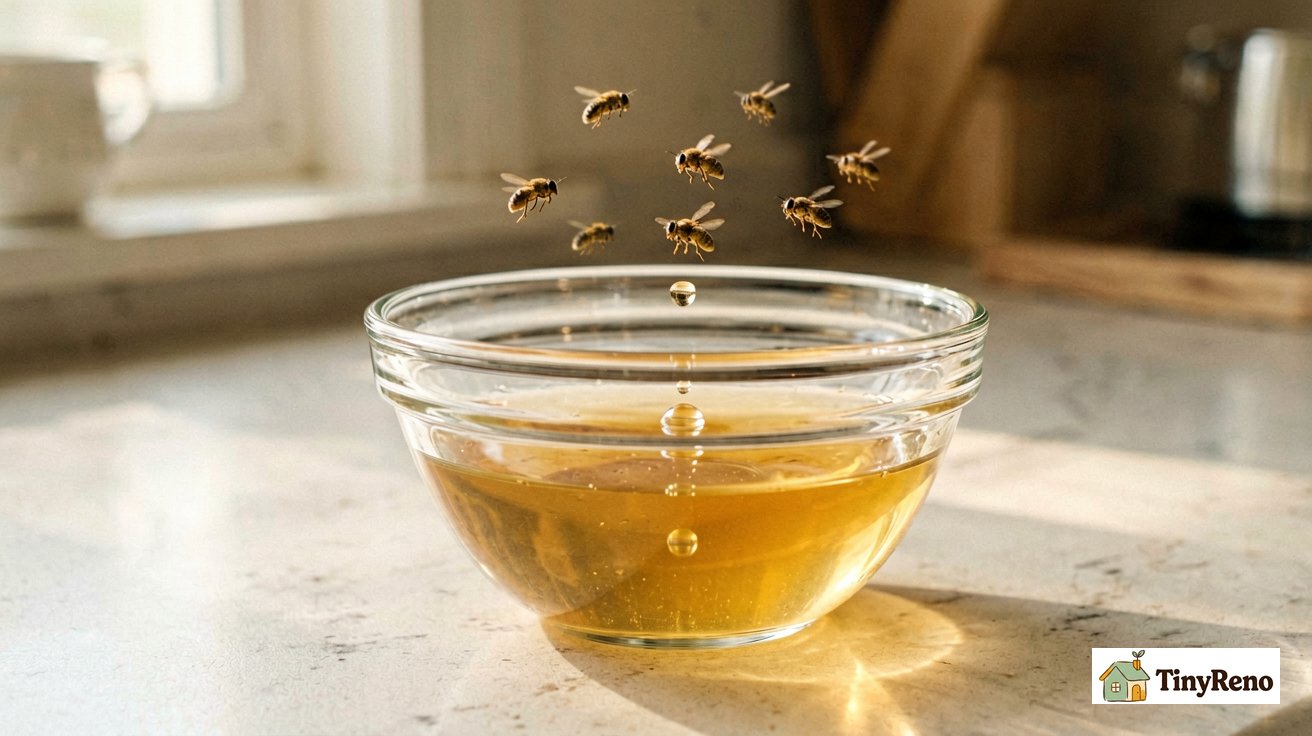
Step 1: Figure out what is actually flying around
Most of the advice on this topic assumes you have the right bug. A surprising number of people don't. The fix for one type will do nothing for another, so this part matters.
Fruit flies. Small, tan or brownish-yellow, rounded body, about an eighth of an inch. They hover near fruit, near windows, and near the sink. They land on your wine glass within minutes. These are the ones the vinegar traps actually work on.
Drain flies. Fuzzier, paler, about a quarter inch. They look like tiny moths and tend to sit on the wall of the shower or above the kitchen sink drain. They emerge when you run water after the sink has been quiet for a while. The vinegar trap works poorly on these because they are not really attracted to fruit or vinegar. They are attracted to the drain biofilm, which is also where they breed.
Fungus gnats. Thin, dark, with longer legs. They hang around houseplants and fly in slow loops near the soil. They breed in damp potting mix. Vinegar traps catch a few, but unless you address the soil, they keep coming.
The fix path is completely different for each. If you have drain flies, your work is in the drain. If you have fungus gnats, your work is in the soil. If you have fruit flies, the work is mostly in the drain anyway, with secondary attention to trash and produce.
Step 2: Find the actual source (it is almost always the drain)
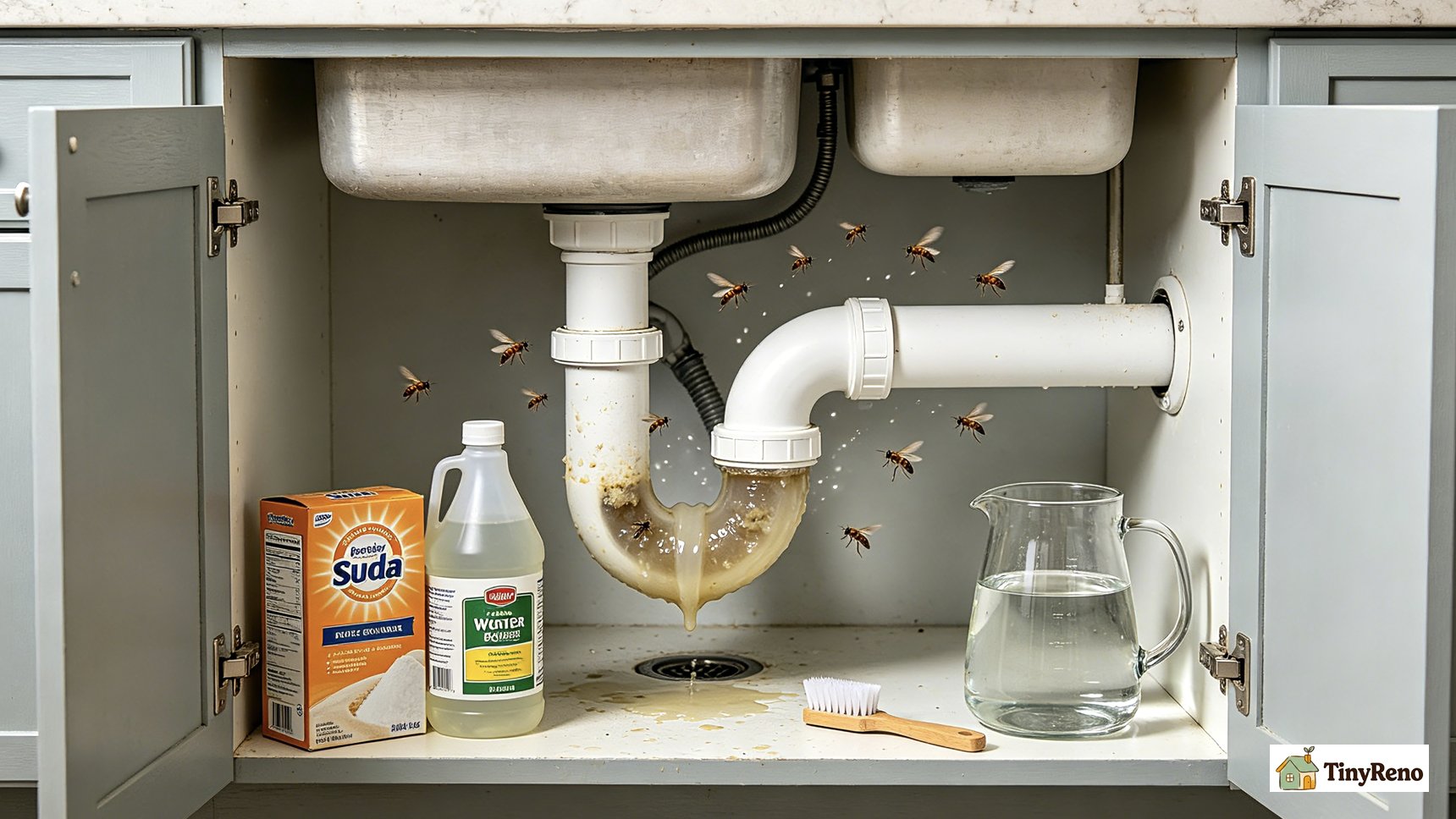
The organic slime that builds up inside the P-trap of any drain, kitchen or bathroom, is the perfect nursery for fruit flies and drain flies. It stays damp, it has bacteria and mold, and it is exactly the kind of place a female fly lays eggs. Most apartments have at least one drain that qualifies, and many have several.
Do a quick walk-through before you do anything else:
- The kitchen sink drain. The most common source by a wide margin.
- The bathroom sink drain. Especially if it gets used multiple times a day.
- The shower or tub drain. Less common, but if you see flies near the tub, this is it.
- The dishwasher drain basket. Often overlooked. Pull the bottom rack and look at the little filter cup.
- The trash can, especially the bottom rim and the underside of the lid.
- The recycling bin, especially if it ever held a soda can or wine bottle with liquid in it.
- Overripe produce hiding in a drawer or on a back counter. Potatoes and onions are the usual suspects.
- Damp sponges, dish rags, and mop heads that have been left bunched up.
- Houseplant soil that stays wet.
If you find even one drain with visible slime, that is almost certainly your source.
Step 3: Kill the source
Once you have located the source, the fix is short. Most of these steps take under five minutes each.
For drains: Pour half a cup of baking soda down the drain, follow with a cup of white vinegar, and let it sit for fifteen minutes. Then boil a kettle of water and pour it slowly down the drain. The baking soda and vinegar loosen the biofilm mechanically, and the boiling water flushes it out. Do this once a day for the first three days, then twice a week for the next two weeks. This is the actual fix. Everything else is a supplement.
For trash and recycling: Take the bins outside. Wash them with hot soapy water, especially the bottom and the rim under the lid. Dry them before putting them back. Line the bottom with a folded sheet of newspaper. The newspaper absorbs any liquid that drips down, which is what was feeding the next generation.
For produce: Anything soft and past its prime goes straight to the outdoor trash, not the kitchen trash. Anything firm (apples, citrus, potatoes) gets checked individually. If you find a forgotten potato in the back of a drawer that has gone soft, that is a known fruit fly nursery. Compost it outside.
For sponges and rags: Wring them out thoroughly and hang them to dry after every use. A damp sponge in a closed sink is fruit fly heaven. Better still, run sponges through the dishwasher once a day if yours fits them.
For houseplants: Let the top inch of soil dry out between waterings. If gnats are persistent, top-dress with a thin layer of coarse sand or decorative gravel. The adults cannot easily reach the soil to lay eggs through the gravel layer.
Step 4: Use vinegar traps the right way
The classic apple cider vinegar trap gets talked up because it is free, easy, and satisfying to watch. The reality is more limited. It catches some adults, especially fruit flies, but it does not by itself end an infestation. Used wrong, it just keeps the population at a tolerable background level while the source keeps producing.
Used right, it is a diagnostic tool. If you set out a bowl and catches spike in the first hour, you have a fruit fly source close by. If catches stay low over 24 hours, your problem is probably drain flies or fungus gnats, and the bowl is not your fix.
To make the trap actually lethal instead of just attractive, add a single drop of dish soap to the vinegar. The soap breaks the surface tension so flies that touch the liquid sink and drown instead of walking on top and flying away. Use a shallow, wide bowl rather than a tall cup. Use roughly equal parts vinegar and water, with a small piece of overripe fruit if you have one. Set one bowl per suspected source, not one bowl in the middle of the kitchen.
Step 5: Skip the stuff that does not work
Some popular remedies look reasonable and quietly do nothing.
Essential oil diffusers. Lemongrass and peppermint oil can repel flies in the short term, but they do not kill anything and they fade as soon as the oil evaporates. Useful for a meeting tomorrow, useless for an infestation.
Bleach straight down the drain. Bleach does kill surface bacteria, but the biofilm in a drain is a physical layer, not just germs. Bleach passes over it and does not actually strip it off. Baking soda plus boiling water does the stripping work.
Bug bombs and commercial sprays in a rental. Most leases forbid them, they leave residue on every surface, and they do not penetrate into drains where the source is anyway. They also contaminate the central air if you are in an apartment building. Not worth it.
UV light bug zappers. They attract more insects than they kill and they do nothing for fruit flies specifically. If you are renting, the noise alone will get complaints.
Step 6: A realistic timeline
Most guides say you can solve this in a day. That has not been my experience, and it has not been the experience of anyone I have walked through it. Fruit fly eggs hatch over a span of days. Even after you remove the source, the eggs already laid will keep producing adults for about a week before they run out.
A typical sequence looks like this:
- Day 1. Identify and clean every suspected source. Set out vinegar traps near each one.
- Days 2 to 3. First noticeable drop in numbers. Continue the drain treatment daily.
- Days 4 to 7. Most of the original adults are gone. A few stragglers appear each day as eggs hatch.
- Days 8 to 14. If the source was the drain, populations taper off. If numbers stay high, you missed a source, usually a second drain or a forgotten vegetable.
By day fourteen, you should see at most one or two flies a day, often none. If you are still seeing more than that, the problem is no longer fruit flies from your own kitchen. Check the trash chute, the shared laundry room drain, or a neighbor's unit if walls are shared.
When to stop and call someone
Call pest control or your landlord if any of these apply. Most apartment infestations do not need this, but a few do.
- You have done the full routine for two weeks and seen no improvement.
- The flies are coming from a cracked pipe or a sink drain that physically leaks. That is plumbing, not pest control.
- The source is fungus gnats from a water leak inside a wall or ceiling. Your landlord's problem to fix and to dry out.
- The population spikes suddenly, with hundreds of flies appearing overnight. That pattern usually points to a dead animal in a vent or wall, which is a different category entirely.
Do not start with pest control. The vast majority of fruit fly problems in a normal apartment are fixable with an hour of cleaning and two weeks of drain maintenance. The reason people end up calling professionals is that they cleaned the wrong things for too long.
The habit that keeps it from coming back
After I cleared my place the first time, fruit flies came back about four months later. I had stopped the drain routine once the problem was gone. They came back because the biofilm had rebuilt.
Now I do one thing: once a week, I boil a kettle of water and pour it slowly down the kitchen drain. Takes two minutes. No baking soda, no vinegar, just the hot flush. That has kept the population at zero for over a year, including the summer months when bananas and peaches live on the counter.
The traps, the cleaning, the lemongrass oil, none of those are the real fix. The real fix is keeping the drain clear. Once you have done the work to clear it, keeping it clear is the easiest habit in the house.
Discussion (0)
Sign in to join the discussion