

Gaps in hardwood floors showed up in the third apartment I rented on my own the week the heat kicked on in November. The gap ran about a sixteenth of an inch wide, sliced straight across the living room floor, and disappeared under the baseboard at both walls. I photographed it, sent the photo to my landlord, and asked if the heat was broken. He replied in eleven minutes with a sentence that cost me three nights of sleep: "We will be deducting $400 for floor damage at move-out unless this is repaired at your expense." That sentence is the reason I now know what gaps in hardwood floors actually are, and why I keep a humidity gauge in the back of my hall closet seven apartments later.
I had been a renter for three years when that first gap showed up, and the only thing I knew about hardwood was that it was the upgrade my last two apartments had over carpet. I did not know that hardwood shrinks when humidity drops. I did not know that "floor damage" and "seasonal movement" are two different things that landlords often call by the same name. I did not know that the upstairs neighbor had been staring at the same gap for eleven winters and had a humidity gauge in her bathroom that she checked every morning like a coffee ritual. This is what I learned across four apartments with hardwood floors, three winters, and one very patient neighbor named Maria who finally banged on my door on a Tuesday to ask why I had not bought a gauge yet.
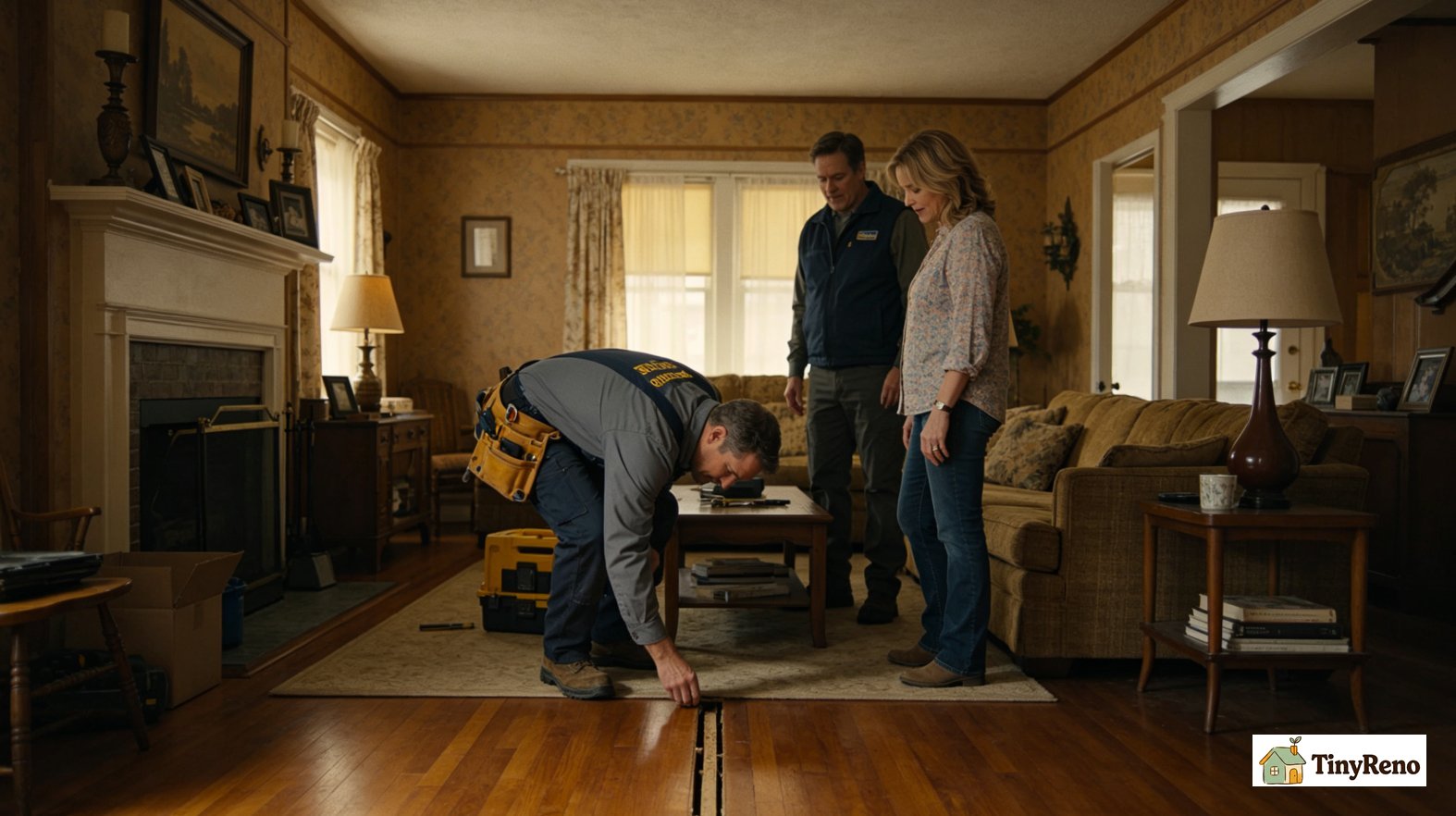
My Sunnyside Apartment's Gap Made Me Think I Had Damaged the Floor
The Sunnyside one-bedroom was the third apartment I'd rented on my own and the first with what the listing called "original hardwood floors throughout." The listing made it sound like a feature. The gap made it sound like a problem. The gap had not been there when I signed the lease in late August, because the building was humid in August and the boards were swollen with moisture the way a sponge is swollen when you pull it out of a sink. By the second week of November, the building heat had been running for about ten days, the indoor humidity had dropped to the high teens, and the boards had given up roughly a sixteenth of an inch of width across the entire living room. That sixteenth of an inch is what became the gap.
I called my mom first, because that is what people do when they think they might lose four hundred dollars of their security deposit. She told me to take more photos, measure the gap with a ruler, and write down the date. I did all of that. I also did three things that made the situation worse before it got better. I bought a space heater for the living room because I thought the gap was from cold. I put a rug over the gap so the landlord would not see it during a maintenance visit. I emailed the landlord a single follow-up asking when the repair would happen, which is the email I now know you never send because it puts the gap on the record as your problem before you know whether it is your problem.
The landlord replied to the follow-up within four hours. He said his maintenance person would come by Wednesday and that I should plan to be home. Wednesday came. The maintenance person was a man named Pete who had worked on the building for nineteen years. Pete looked at the gap for about thirty seconds, walked back to the kitchen, and asked me where my humidity gauge was. I told him I did not have a humidity gauge. He asked me what my indoor humidity was running. I told him I did not know. He opened his bag, pulled out a small digital gauge, set it on the kitchen counter for ninety seconds, and showed me the reading: 18 percent. He told me the gap was from seasonal shrinkage, that the building had the same gap every winter, that the previous tenant had the same gap, and that the previous tenant before her had the same gap. He told me to buy a gauge, get the humidity to between 35 and 50 percent, and stop emailing the landlord about it. He told me the gap would close on its own in about two weeks. He was right on all four counts.
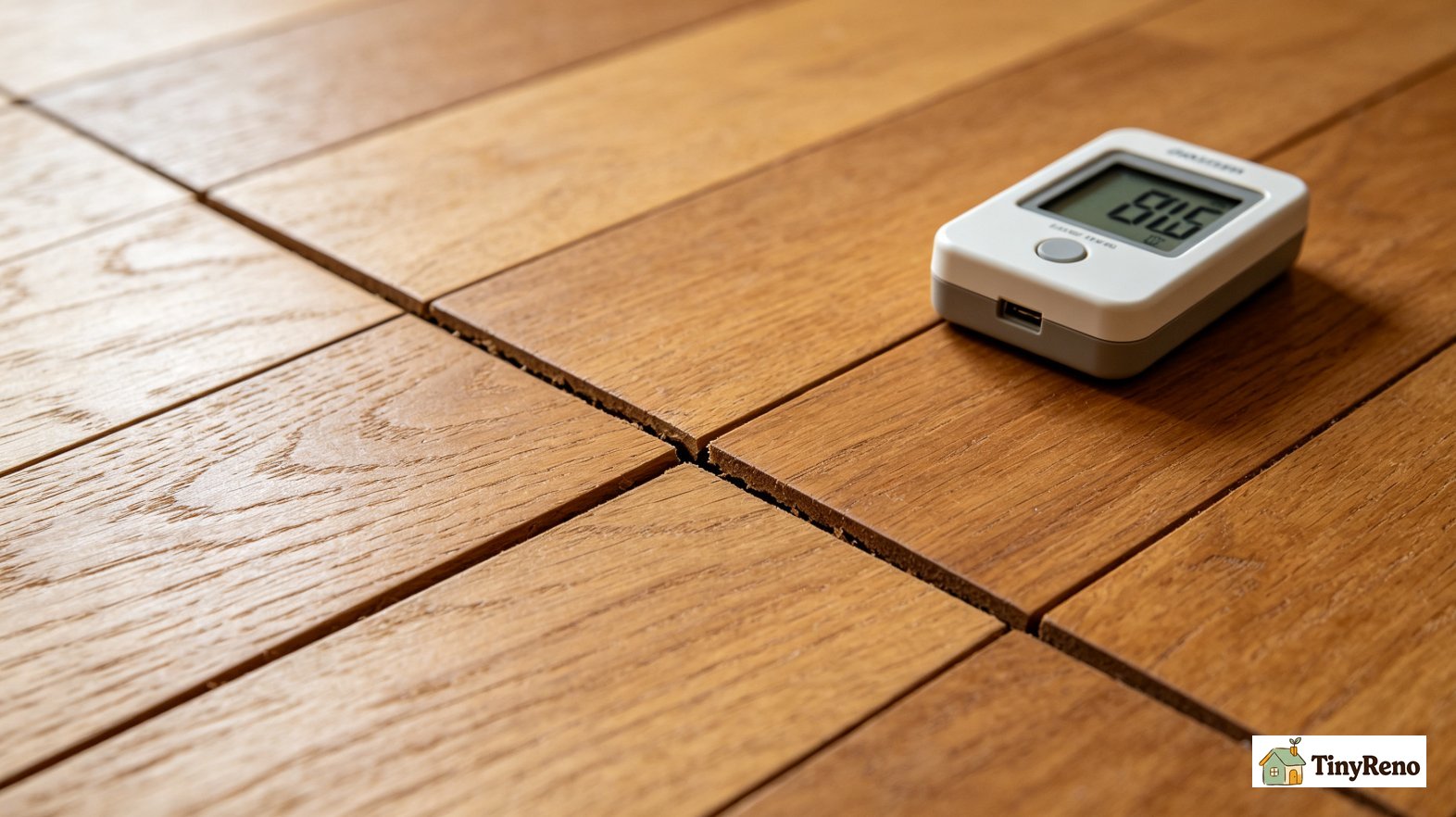
Maria Showed Me a Humidity Gauge and the Gap Closed in 14 Days
Maria lived directly above me for the eleven years she had been in the building. Her apartment had the same gap, every winter, in the same spot, because the layout was identical to mine. She had a humidity gauge in her bathroom because her cat had asthma and the vet told her to keep the apartment between 40 and 50 percent for the cat's lungs. The cat was the reason she knew about these gaps before I did. The vet had explained the same thing Pete explained to me: wood moves with humidity, hardwood shrinks when indoor humidity drops below about 35 percent, and the gap that shows up in November closes back up when humidity returns in April or May.
Maria told me three things that I now consider the foundation of everything I know about hardwood gaps. The first is that a sixteenth of an inch is normal. The second is that an eighth of an inch is borderline and worth tracking. The third is that anything wider than a quarter inch is not seasonal, and that one is the landlord's problem, not mine. She also told me that the floor would tell me what was wrong with it if I paid attention, and that the trick was to learn the difference between seasonal movement, water damage, structural movement, and the kind of gap that happens when a board has actually come loose from the subfloor. She said she had been a renter in four apartments over thirty-one years and the gap question was the single thing that came up at every single move-out walkthrough.
I bought a humidity gauge the next morning at the hardware store on Queens Boulevard for $11.40. I put it on the living room floor next to the gap. The reading that afternoon was 19 percent. I bought a small warm-mist humidifier for the bedroom, ran it for two weeks, and watched the gauge climb to 41 percent by the end of the first week and 44 percent by the end of the second. The gap closed visibly by day nine and was fully gone by day fourteen, exactly when Pete said it would be. I have kept a humidity gauge in every apartment since, and the gauge has been the single most useful fourteen dollars I have ever spent as a renter. The humidifier cost forty-two dollars. The gap closing on its own saved me the four-hundred-dollar deduction the landlord had threatened.
The 4 Types of Hardwood Gaps and Which Ones You Fix
The four types of gaps in hardwood floors that I have seen across my four hardwood apartments and three rentals belonging to friends who have called me in a panic all show up at different times of year, in different rooms, and for different reasons. The first type is the seasonal shrinkage gap. This is the one Maria's cat taught me about. The boards shrink because indoor humidity has dropped below 35 percent for at least two or three weeks. The gap runs straight across multiple boards and disappears under the baseboard at both walls. The fix is humidity, not filler. A renter should not fill this gap because the gap is going to close on its own in April and the filler will crack and look worse than the gap did.
The second type is the cupping gap. This shows up at the edges of individual boards when the board has absorbed moisture from below, often because of a slow leak under the kitchen sink, a wet mop habit, or a refrigerator line that drips onto the subfloor. The gap looks like a small ridge along the long edge of the board, the board itself is slightly higher on the edges than in the middle, and the gap usually shows up in a localized spot rather than across the whole room. A renter should not fix this. The renter should photograph it, write down the date, and email the landlord that there may be a moisture issue under the floor. Cupping is the kind of gap that becomes a $3,000 subfloor replacement if you ignore it for six months.
The third type is the end joint gap. This is the gap that opens up where the short ends of two boards meet, usually within the first two years of a floor being installed. It happens because the installer left too much space at the joint, or because the boards were not acclimated to the apartment's humidity before installation. The gap is usually a sixteenth to an eighth of an inch wide and only at the joint, not running the length of the board. A renter can fix this with a small amount of wood putty that matches the floor color, pressed into the gap with a plastic putty knife and wiped clean. The fix lasts until the next seasonal cycle, when the putty may crack and need to be redone.
The fourth type is the wide structural gap. This is any gap wider than a quarter inch, any gap that runs along the entire length of a board rather than across the floor, and any gap where the board itself has visibly lifted or shifted. This type of gap is not seasonal, is not humidity, and is not something a renter should fix. This type of gap is the landlord's responsibility and usually means a board has come loose from the subfloor, the subfloor itself has moved, or there is a structural issue below the floor that needs a professional. A renter who tries to fill a structural gap with caulk or putty will end up responsible for the entire floor when the landlord inspects at move-out. The right move is to photograph it, send the photo to the landlord in writing, and ask for the floor to be assessed by a professional before the gap gets worse.
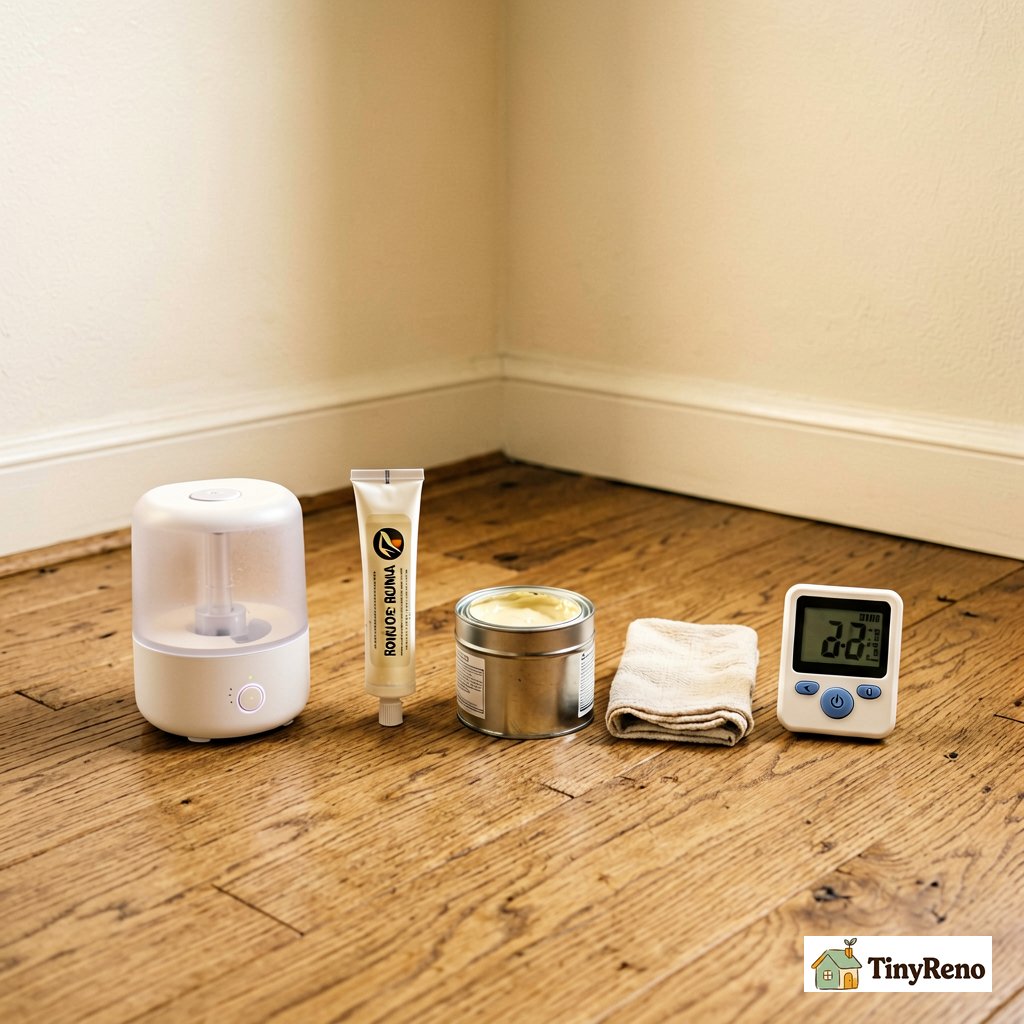
The 5 Renter Fixes I Now Use (and the 1 That Traps Moisture)
The five renter fixes for gaps in hardwood floors are sorted by gap size and by how reversible they are, because the most important rule of renter floor repair is that anything you do to the floor has to be removable when you move out. The first fix is to do nothing, and that is the right call for any gap smaller than a sixteenth of an inch that shows up in November and closes by April. Doing nothing is also the right call for the seasonal shrinkage gap I described in the Sunnyside apartment. The fix is humidity, which I cover in fix number two.
The second fix is a humidifier. This is the fix for any gap that shows up in winter and measures less than an eighth of an inch. A small warm-mist humidifier running in the room with the gap, paired with a humidity gauge that you check every few days, will close the gap in two to four weeks in my experience. The humidifier costs between thirty-five and sixty dollars and the gauge costs between ten and fifteen. The total investment is less than the deposit deduction the landlord will charge if you ignore the gap or fill it wrong. The humidifier also helps the cat, the houseplants, and your skin in winter, so it is not a single-purpose purchase.
The third fix is rope caulk. This is the fix for gaps between an eighth and a quarter inch that have stayed open through two humidity cycles. Rope caulk is a braided cotton cord that you press into the gap with a plastic putty knife. It stays flexible, it expands and contracts with the boards, and it pulls out cleanly when you move out. The cost is about eight dollars for a roll that will cover most of a living room. The application takes about twenty minutes for a small room. Rope caulk is the renter fix that most flooring professionals will tell you about if you ask, and most landlords will accept at move-out because it does not damage the floor.
The fourth fix is wood putty matched to the floor color. This is the fix for end joint gaps and for small spots where a board has visibly chipped along an edge. Wood putty is not as reversible as rope caulk, but it can be sanded off at move-out if the landlord is reasonable, and most landlords are reasonable about end joint gaps that were caused by the original installation. The cost is about six to twelve dollars for a small tin, and the application takes about ten minutes per gap. The downside is that putty does not flex with the boards, so it can crack if the gap opens and closes seasonally. You may need to redo the putty once or twice a year for the worst gaps.
The fifth fix is a dehumidifier in summer. This is the fix for gaps that close in winter and then turn into cupped edges in summer because the apartment gets too humid. The dehumidifier costs more than the humidifier, between one hundred and fifty and three hundred dollars, and it is worth buying only if your apartment has a known summer humidity problem, which most city apartments do not. For most renters, the humidifier and the rope caulk and the wood putty are the three tools that cover ninety percent of gap situations. The dehumidifier is the extra.
The one fix I do not recommend is regular silicone or latex caulk. The hardware store will sell you a tube of caulk and tell you to run a bead along the gap, and the caulk will look fine for the first month. Then the boards will expand in summer and the caulk will either squeeze out of the gap as a messy ridge or it will hold the boards in place and create cupping somewhere else along the same board. Worse, silicone caulk traps moisture under the floor and can turn a simple seasonal gap into a subfloor mold problem that costs thousands of dollars to remediate. I tried silicone caulk in my second apartment because the hardware store guy said it would work, and I paid a four-hundred-dollar floor repair at move-out to undo what the caulk had done.
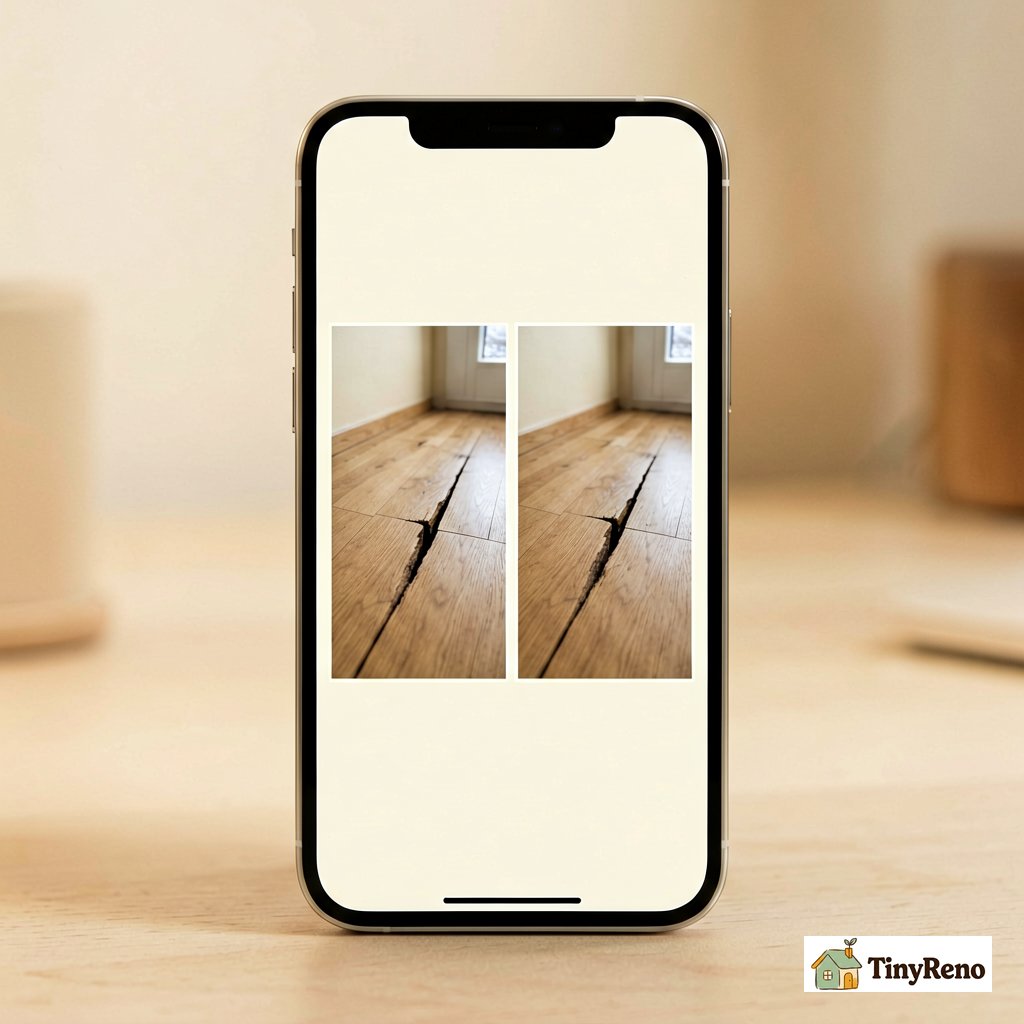
The 3 Pieces of Evidence That Got My $1,200 Deposit Back
Three pieces of evidence are what saved my deposit when I moved out of the third apartment I rented with hardwood floors. The first piece of evidence was the humidity log. I had taken a photo of the humidity gauge reading next to the gap every Tuesday morning for the entire eleven months I lived in that apartment. The photos showed the gap closing as the humidity climbed in spring, the gap opening as the humidity dropped in fall, and the gap staying closed through summer. The photos were dated automatically by the phone, so there was no question about when each one was taken. When the landlord pulled out his move-out checklist and pointed at the gap that had reappeared in October, I showed him the eleven-month photo log. He crossed the gap off the checklist without a word.
The second piece of evidence was the receipt for the humidifier and the gauge. The receipt showed that I had purchased both items within the first two weeks of the lease, before the gap had appeared. The receipt also showed the brand and the model of the gauge, which I had cross-referenced to the manufacturer's published accuracy specifications. The point of the receipt was not the price. The point of the receipt was the date. The date proved that I had been managing humidity from the start of the lease, not after the gap had appeared. The landlord could not argue that I had damaged the floor and then tried to cover it up by buying a humidifier. The humidifier had been there before the gap.
The third piece of evidence was the email I had sent to the landlord in April, when the gap had closed for the first time. The email said, in two sentences, that the gap had opened in November, that I had tracked the humidity, and that the gap had closed on its own in April. The email was not a complaint, was not a request for repair, and was not an admission of damage. The email was a status update that created a written record of the seasonal cycle. When the gap reopened in October of the next year, the landlord could not claim the gap was new damage. The gap had been documented as seasonal in April, and the documentation was in his email.
The total deposit at stake in that apartment was twelve hundred dollars. The total cost of the three pieces of evidence was eleven dollars for the humidity gauge, forty-two dollars for the humidifier, and about ten minutes a week to take the photo. The deposit came back in full. The landlord wrote me a reference letter for the next apartment, which I still have. The letter said, in part, that I had been the most documented tenant he had in twenty-six years of renting, and that he wished more tenants understood gaps in hardwood floors the way I eventually did. The letter cost me nothing and earned me a hundred-dollar referral discount from the next landlord, who read it before he showed me the apartment.


Discussion (0)
Sign in to join the discussion