

Quick note: this is not legal advice. Noise complaint and tenant rights procedures vary by city and by lease. This is based on personal experience, not legal counsel.
The upstairs neighbor in my Chicago three-flat had a treadmill, a subwoofer, and a dog that barked when she left for midnight shifts. For six months I weighed saying something against the risk of making an enemy in the hallway, and I tried several approaches in a specific order. That order mattered: the way you escalate determines whether the noise gets fixed or the building becomes a hostile place to live.
I went through six months of this in a three-flat in Chicago. The upstairs neighbor had a treadmill, a subwoofer, and a dog that barked when she left for midnight shifts. I tried several different ways to deal with it, and I learned that the order matters — the way you escalate determines whether the noise gets fixed or whether the building becomes a hostile place to live. Here is what worked, what did not, and when you should skip the nice approach and call someone.
Start with a polite note — but keep it short
The first thing I tried was a short note under the neighbor's door. I wrote it on an index card, no name, no unit number, just a simple message: "Hi — I work early mornings and the noise after 11 pm has been keeping me up. If you could keep it down after 11, that would mean a lot."
It worked for about three weeks. The noise got quieter, the treadmill slowed down, and for a while I thought it was solved. Then it crept back up. The note works because most people are not trying to be rude — they just do not realize how loud they are. A polite anonymous note gives them a chance to fix it without feeling confronted.
The downside: it does not create a paper trail, and it does not work on people who are deliberately loud or who have no control over their schedule (like night-shift workers). But it is a good first step because it is low-risk. If the neighbor is reasonable, this is all you need.
If the note does not work, try a short conversation
If the noise comes back, the next step is a short, calm conversation in person. Do not knock on the door at midnight when the noise is happening — that reads as a confrontation, not a request. Wait until you run into each other in the hallway or the laundry room, and keep it brief.
Something like: "Hey, I live downstairs — I wanted to mention that the treadmill at night is pretty loud through the floor. I know you are on a weird schedule, but would you mind putting a rug under it? That would help a lot." The key is to name the specific problem, not the person, and to ask for a specific fix, not a vague "please be quiet."
This often works when the neighbor is reasonable and you are calm; it rarely works when they are hostile or when you knock while angry. If you are frustrated, sleep on it and try again the next day.
If the conversation does not work, put it in writing to your landlord
This is the step that actually fixes the noise. A written complaint to your landlord or building manager creates a paper trail, and it gives them the leverage to talk to your neighbor in a way you cannot. They are the manager, not a peer, and the neighbor has to listen to them.
Here is how to do it right:
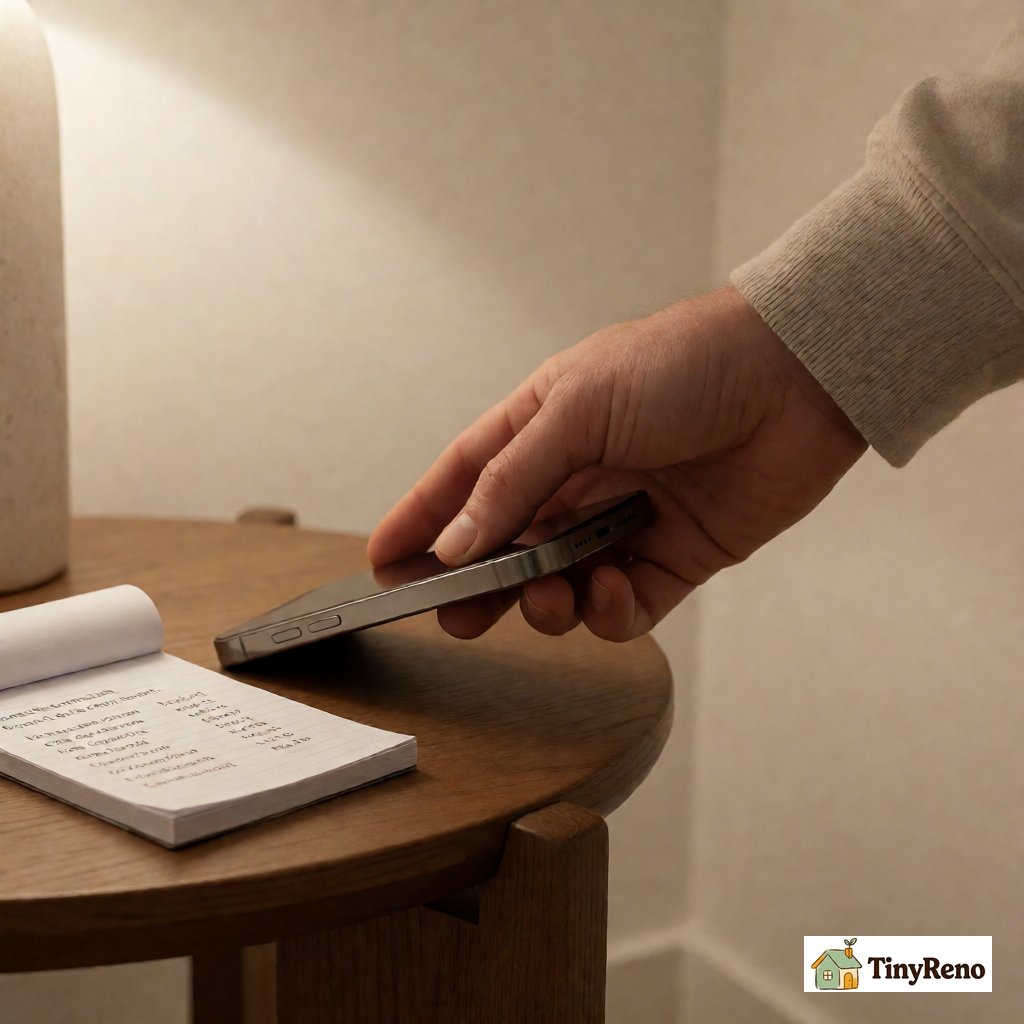
Keep a noise log on your phone. For each incident, record the date, start time, end time, type of noise (treadmill, music, dog barking, arguing), and whether it woke you up. A notes app is enough. A free decibel-meter app can add a rough number, but date, time, and duration are the evidence that matters; a contemporaneous log beats a one-off anecdote.
When you have about a week of entries—ideally at least three incidents concentrated in quiet hours, not ten scattered across the afternoon—send a short email to your landlord. Keep it factual, not emotional. In Chicago, the legal hook is Section 5-12-040(g) of the Residential Landlord and Tenant Ordinance, which requires tenants to conduct themselves so as not to disturb neighbors’ peaceful enjoyment; the landlord has a duty to enforce that. Something like: “I am reporting ongoing noise from the unit above mine. I have attached a log showing the dates, times, and duration. The noise typically occurs between 11 p.m. and 2 a.m. on weeknights. Under Section 5-12-040(g) of the Chicago RLTO, could you please address this with the upstairs tenant?”
That is it. Do not write a novel. Do not call the neighbor names. Just state the facts, attach the log, and ask for help. Your landlord will talk to the neighbor, and because they are the manager, the neighbor will take it seriously. In my case, the noise dropped by about two-thirds within a week.
What not to do: the things that make it worse
There are a few approaches that people try when they are frustrated, and they almost always backfire:
Do not post about it on social media or in the building group chat. Naming and shaming your neighbor online ends badly. They will see it, they will get defensive, and the relationship will turn hostile. You might even get a counter-complaint for harassment. The noise might get worse, not better.
Do not confront them in the hallway at midnight when the noise is happening. A 1 am confrontation reads as an attack, not a request. You are tired, they are tired, and the conversation will turn into an argument. It will not result in a quieter apartment — it will result in a grudge.
Do not bang on the ceiling or the wall. It escalates the conflict without resolving the noise. Your neighbor will know it is you, and they will retaliate by making more noise. It is a cycle that never ends well.
When to call the police
There are times when you should skip the polite approach and call the police. This is not for every loud party — this is for situations where the noise is a sign of something more serious:
If you hear fighting, shouting, or sounds that sound like violence, call the non-emergency police line. If you hear sounds that suggest someone is in danger, call 911. If the noise involves illegal activity — drug use, weapons, anything that feels unsafe — call the police.
For chronic noise, the police are usually not the first step. Chicago routes non-emergency noise complaints through 311, which creates a tracked service request; 911 is for incidents in progress where a police presence is needed to resolve a safety issue. A one-off 311 report may result in a visit and a warning, but the noise often resumes after the officer leaves. The landlord is the right first channel for a recurring neighbor-noise problem; 311 becomes more useful when the landlord does not act or when the noise is tied to a code or ordinance violation.
If your landlord does not fix it
What if you send the email, you keep the log, and the landlord does nothing? This happens sometimes. If your landlord is not responding, or if they are not enforcing the quiet hours in the lease, you have options.
First, follow up. Send a second email after a couple of weeks, referencing the first one. Sometimes landlords get busy and forget. A polite reminder is enough.
If that does not work, check your local noise ordinance. Most cities have noise laws that set quiet hours (usually around 10 pm to 7 am on weekdays). You can file a complaint with the city, and they might send an inspector. This is a bigger step, but it is an option if your landlord will not act.
As a last resort, withholding rent or breaking the lease may be legally available, but the conditions are strict. In Chicago, the RLTO generally requires written notice and a cure period—often 14 days—before a tenant can claim material noncompliance; noise must rise to the level of making the unit unlivable, not merely annoying. Do not take this step without talking to a tenant-rights organization or legal aid clinic first. It is a remedy of last resort, not a negotiating tactic.
For a recurring neighbor-noise problem, the sequence that gives you the best chance of a fix without burning the relationship is: a short note, a calm in-person conversation if the note does not hold, then a factual written complaint to the landlord with a noise log. If the landlord does not act, 311 is the next documented step. Social-media shaming, midnight confrontations, and wall-banging make the situation worse. If the noise involves violence or immediate danger, call 911; do not try to handle that yourself.
In my case, the written complaint to the building manager fixed it. He talked to the upstairs tenant; the treadmill went on a rug, the subwoofer came off the floor, and the dog got walked before the midnight shift. The noise dropped by about two-thirds, and I still nod at the neighbor in the hallway. That outcome is not guaranteed—it depended on a manager willing to enforce the lease and a neighbor who responded to the manager—but escalating through the manager rather than directly gave the relationship a better chance.


Discussion (0)
Sign in to join the discussion