

My apartment is a top-floor one-bedroom on the west side of a 1962 walk-up in Capitol Hill, Seattle. The windows face west and south, and the lease forbids window AC units. In July, when the afternoon sun hits the west wall and the kitchen thermometer climbs into the low 90s, the cat flattens himself under the bathroom sink and I start looking for ways to cool the place down without drilling a hole or violating the lease.
I spent four weeks trying six cooling approaches, tracking temperature twice a day with two cheap thermometers on the kitchen counter and the bedroom dresser. The results were not what I expected. Three approaches did almost nothing. Two bought a few degrees. One low-cost reflective film—a thin static-cling roll I found for about $4, not a professional high-IR film—bought seven degrees at peak. Here is what worked, what did not, and what I wish someone had told me before I started.
The biggest mistake: opening the window during the day
Before I started tracking temperatures, I did what everyone does on a hot day: I opened the windows. It felt like the right move. It felt like air was moving. But if the outdoor temperature is higher than your indoor temperature—which it usually is in the afternoon, especially on a top floor facing west—opening the window just lets hot air in. The thermometer confirmed it. On a 91°F afternoon, opening the west window dropped the reading by about half a degree for the first ten minutes, then it climbed back to 91°F and kept going.
The rule I learned the hard way: keep the sunny-side windows closed and covered during the day. Open them only when the outdoor air is cooler than the indoor air, which in Seattle in July happens in the early morning and after sunset. If you open the windows at noon on a 90°F day, you are heating your apartment, not cooling it.
The reflective window film: the cheapest upgrade that actually works
The single most effective thing I did was put reflective heat-control film on the west-facing windows. It cost about $4 for a thin static-cling roll at the hardware store, and it installed with soapy water and a squeegee—no drill, no adhesive, no lease violation. This is not a professional high-IR film; those can cut solar heat gain much more aggressively, with SHGC values in the 0.20–0.40 range. A $4 roll is a modest version, but on a west window even a modest reduction in solar gain helps.
With the film on the window and the curtains drawn, the afternoon peak dropped from 91°F to 84°F. That is seven degrees, and it paid for itself within the first afternoon. On nights after a filmed day, the bedroom started at 78°F instead of 84°F, because less heat had built up during the day and the room entered the evening cooler.
One thing to know before you buy it: the film is removable, but it can leave a faint adhesive residue on the glass when you peel it off. A spray of glass cleaner and a paper towel takes care of it, and your landlord is unlikely to notice. It also slightly tints the window — not dark, but you will see it from the inside. If you have a great view, this might bother you. If you have a view of the brick wall next door like I do, it does not matter.
Blackout curtains: three degrees, plus holding the cool air at night
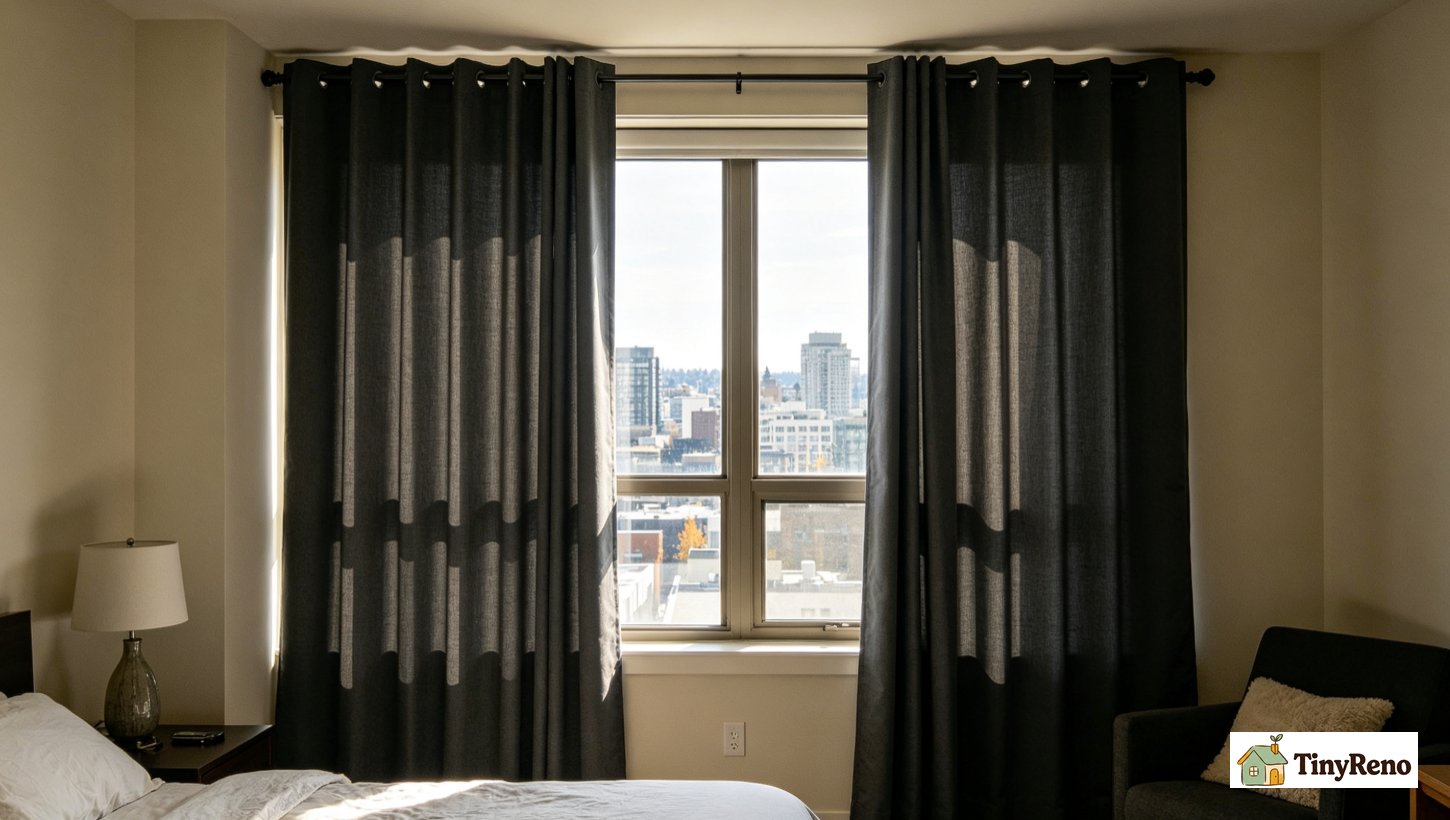
Next was blackout curtains. I bought a pair of thick, lined curtains for about $50, hung them on the west window, and kept them drawn from 1 p.m. to 6 p.m. In the curtain-only test, the afternoon peak dropped from 91°F to 88°F—three degrees. Real, but not dramatic.
The bigger number came at night. In the curtain-only test, the room stayed around 79°F at 11 p.m. instead of 82°F. The curtains did not cool the air during the day, but they kept the cool air cool once it arrived. If you already have curtains, adding a liner is cheaper than buying new ones. The key is full coverage: top to bottom, no gap at the sides. A curtain that hangs half an inch from the frame lets heat leak in around the edges.
The pre-dawn window flush: free, but you have to wake up early
The building manager told me about this one, and it works. The idea is to open every shaded-side window before sunrise, when the outdoor air is coolest, and close the sunny-side windows before the sun hits them. In Seattle in July, sunrise is around 5:20 a.m., and the outdoor temperature at 5 a.m. is about 58°F.
I opened the north-facing bedroom window and the shaded east kitchen window, closed the south and west windows, and drew the curtains. By 6 a.m. the indoor temperature was 67°F—the lowest of the day. By 7 a.m., with the sun starting to clear the building next door, I closed the bedroom window and left the kitchen cracked for another hour. The pre-dawn flush held the apartment below 72°F until about noon: a six-hour buffer before the afternoon heat.
This is the only free method that actually works. The catch is that you have to wake up early to do it. If you are not a morning person, this is not for you. But if you can set an alarm for 5 a.m. in July, it buys six hours of comfortable air without spending a dollar.
The evaporative cooler: works on dry days, useless on humid days
I rented an evaporative cooler—a swamp cooler—from the local tool library for a few dollars a day. It pulls in outdoor air, runs it through a wet pad, and blows cooler air inside. It is not an air conditioner; it adds humidity, and it only works when outdoor humidity is low.
On a dry day, when humidity was around 38%, the cooler dropped the afternoon peak by about five degrees. On a humid day, when humidity was 71%, it dropped the temperature by less than two degrees. Research on evaporative cooling puts the practical threshold around 50–60% relative humidity; above 60%, cooling capacity can fall by as much as half or more, and the added moisture can make the air feel worse. Seattle July humidity varies by source—around 61% in some climate normals, closer to 73% in others—so the evaporative cooler is a gamble here. It works on the dry days; on the humid days it is a box fan that makes the air feel muggier.
In a dry climate—Arizona, New Mexico, parts of California—an evaporative cooler is a solid investment. In a humid climate like Seattle or the East Coast, it is not worth buying. Rent one for a dry spell if you need it, but do not expect it to carry you all summer.
The fans: they feel cool, but they do not cool the room
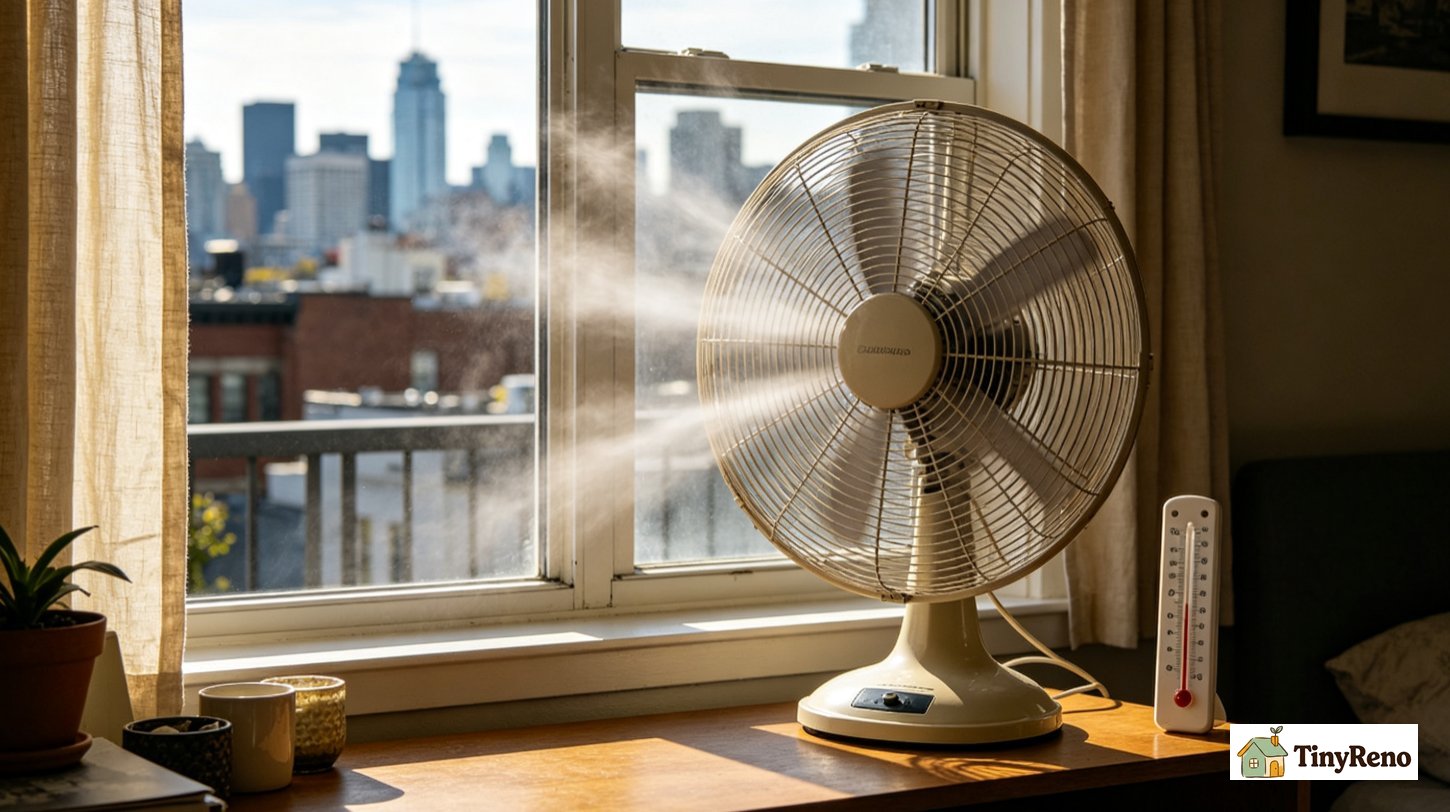
Here is the truth about fans: they do not lower the room’s air temperature. They move air across your skin, which increases convective heat loss and accelerates sweat evaporation, making you feel cooler. The thermometer barely moves. I tested a box fan facing outward in the window—the “fan out” trick you see online—and a tower fan in the corner. The box fan moved the room temperature by about one degree; the tower fan by half a degree.
That does not make fans useless. A fan on your face on a 90°F afternoon can feel several degrees cooler, depending on humidity and airflow, because the air movement is evaporating sweat. But if you are trying to lower the actual air temperature, fans are not the tool. They are a comfort tool, not a cooling tool.
One tip: run the fan only when you are in the room. Fans cool people, not rooms. If you leave, turn it off. It wastes electricity and adds a little heat from the motor if no one is there to benefit.
The bottom line
After four weeks of tracking, the order by actual temperature reduction was: reflective window film (seven degrees at peak), pre-dawn window flush (six hours of cool air), blackout curtains (three degrees at peak, plus holding the cool at night), evaporative cooler on a dry day (five degrees), box fan (one degree), tower fan (half a degree).
The film and curtains were silent, which mattered for sleep. The fans were noisy, and the box fan was loud enough that I could not sleep through it. The evaporative cooler was quieter than expected, but it only worked on dry days.
For a rental where window AC is forbidden, the cheapest and most effective combination is reflective film on the sunny-side windows plus curtains drawn during the day. Add the pre-dawn flush if you can wake up early. Skip the expensive fans—they feel nice, but they do not lower the air temperature. And the most important rule: keep sunny-side windows closed and covered during the day. Opening them when it is hot outside is the fastest way to heat the apartment.


Discussion (0)
Sign in to join the discussion