

I installed a $32 bidet attachment in my bathroom in late January 2026 and tracked the cost against toilet paper for 90 days. I live alone in a fourth-floor walk-up in West Philadelphia. The lease is a twelve-month rental on a 1960s one-bedroom; the bathroom has a standard two-piece American Standard toilet, and my landlord does not mind non-invasive changes as long as I do not drill holes. The bidet sits between the tank and the seat and required no permanent modification. I expected a simple savings number that would justify the $32. What I got was a smaller and slower payback than I expected, plus a few comfort issues that mostly faded.
The 90 days broke into three blocks of 30. The first 30 days were the baseline, no bidet, the same toilet paper I had been buying for two years. The second 30 days were the bidet install and the adjustment window. The third 30 days were what the new normal looked like once I had learned the right paper amount. Every roll I bought went into the notebook with the date, the brand, the ply count, the roll count, and the price. Every receipt went into a folder in the kitchen. The folder had 32 receipts at the end of 90 days. The notebook had 32 entries. The numbers came out of those two sources.
Day 1 to Day 30: The Baseline Without a Bidet
The baseline 30 days used 18 rolls of Cottonelle Clean Care, 2-ply, 350 sheets per roll, from a Costco giant pack at $0.83 a roll. I bought the pack in two trips because the cabinet under the sink holds only 12 rolls. The first 30 days cost $14.94, or $0.498 per day. I had used the same brand for two years, and the only variable during the test was the bidet. That month was unusually high because my sister stayed with me for several days and used the same bathroom. Even so, 18 rolls set the comparison. If the bidet had cut the roll count in half, I would have saved $7.47 per 30 days and $22.41 over 90 days, and the $32 attachment would have paid for itself in about 130 days. That was the hypothesis. The actual roll count fell by about a third, not half.
Day 31: The Install Took 15 Minutes and a Wrench
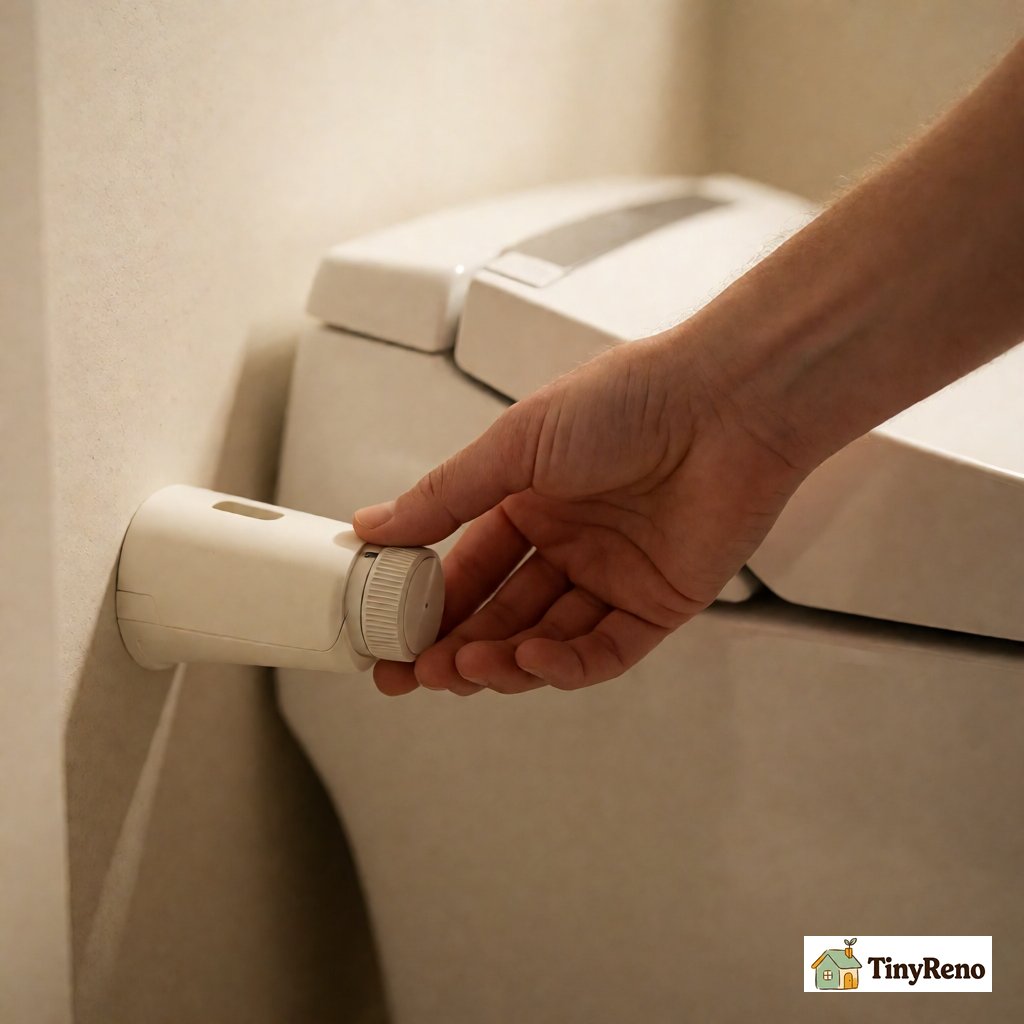
The bidet attachment I bought was the LUXE Bidet Neo 185, the non-electric version with a side-arm control for water pressure. It cost $32.19 on Amazon with Prime shipping. The package included the attachment itself, a 7/8-inch T-valve that splits the water feed between the tank and the attachment, a rubber gasket, two 24-inch braided steel hoses, and a mounting bracket with two plastic wing nuts. The install steps were: shut off the water at the wall valve, flush the toilet to empty the tank, unscrew the supply hose from the bottom of the tank, screw the T-valve onto the tank, screw the original supply hose to the bottom of the T-valve, screw one of the new braided hoses to the side-outlet of the T-valve, screw the other end of that hose to the bidet attachment, slide the attachment into the bracket under the seat holes, tighten the wing nuts. The whole sequence took fifteen minutes with a pair of channel-lock pliers and a bath towel for the small amount of water that comes out when you disconnect the supply hose.
The first test flush was awkward. The water pressure was too high. The angle was wrong. The first week of use was not comfortable. The seat sat slightly higher than before because the bracket adds about three-quarters of an inch. The control arm on the side of the attachment is metal and gets cold at 6 a.m. The water temperature is whatever the bathroom pipes are at, which in a January apartment in Philadelphia is about 55°F. None of those complaints were deal-breakers. All of them went away by week two. By week three the bidet was the new normal and I had stopped noticing the seat height. By day 60, I had stopped thinking about the temperature.
Day 31 to Day 60: The First 30 Days With the Bidet
The first 30 days with the bidet used 15 rolls, a 17 percent reduction from 18. That was less than I expected because I was still adjusting. I treated the bidet as an add-on rather than a replacement, using water first and then drying with the same amount of paper as before. By week four I had learned that one or two squares were enough after a full spray, instead of the six to eight I had been using. The 15 rolls cost $12.45. Water use is small but not negligible: at about 1/8 gallon per use, four uses a day, and Philadelphia’s roughly $0.0122 per gallon, water costs about $0.18 to $0.25 a month, not $0.04 and not $0.50. The first 30 days were an adjustment window, so the third month is the better comparison point.
Day 61 to Day 90: The New Normal
The third 30 days used 11 rolls, a 39 percent reduction from 18. The cost was $9.13, and the per-day cost fell from $0.498 to $0.304. The trend was 18, then 15, then 11 rolls. A fourth month might have been around 8 rolls, but that is a projection, not data. The 39 percent reduction is the figure I would quote, with the caveat that the first month was an adjustment window. The reason for the drop was paper amount per use: before the bidet I used eight to twelve squares; after, two to three. That per-use drop is larger than the monthly roll drop because guest visits did not change. At $0.83 a roll, the third month saved seven rolls versus baseline, or $5.81. Eleven rolls was the third-month usage, not the number saved.
The Total 90-Day Math
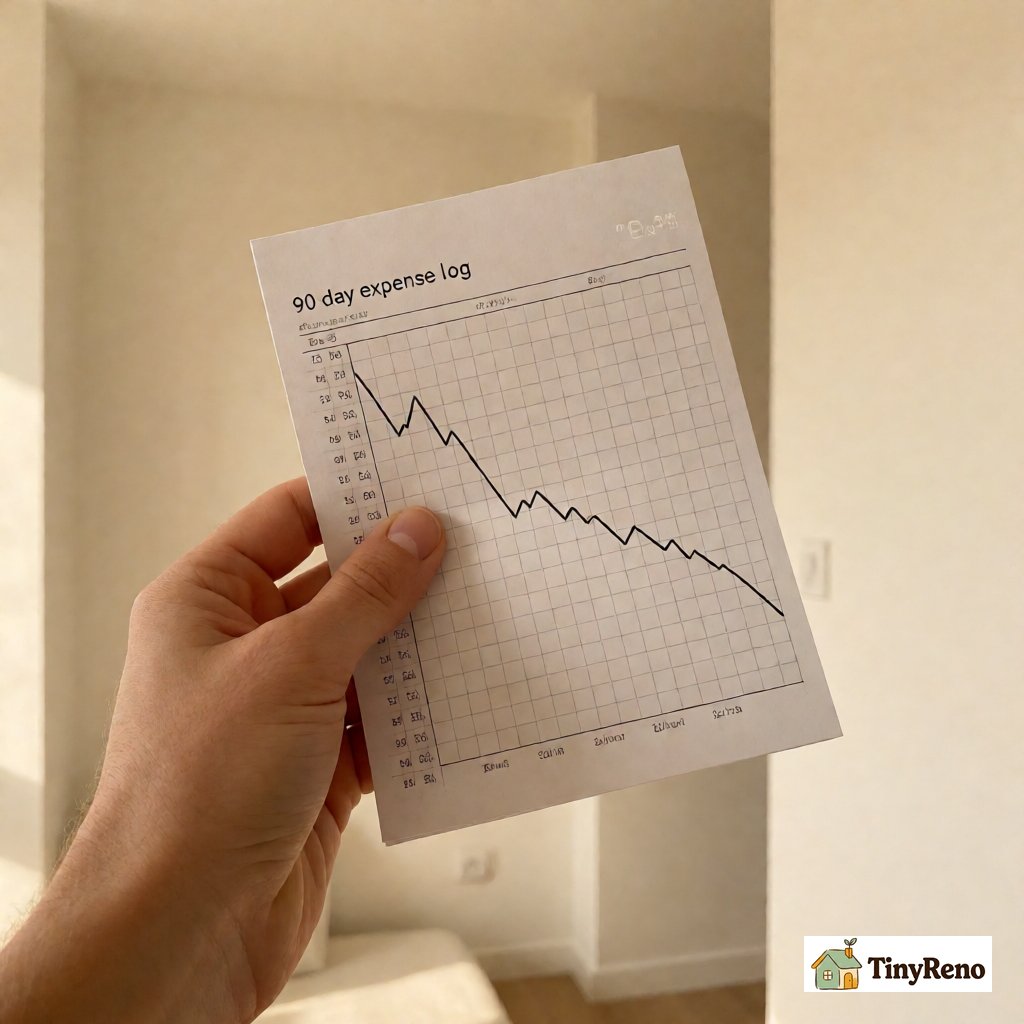
The 90-day toilet-paper spend was $43.74 in the baseline period (54 rolls at an average $0.81) and $30.71 in the post-bidet period (37 rolls at $0.83). The net savings were $13.03 over 90 days. The bidet cost $32.19, so breakeven was about 222 days, roughly seven and a half months—not 91 days. If I use the more conservative $10.72 net savings from a $33.02 post-bidet total, breakeven is about 270 days. Either way, payback is closer to eight or nine months than three. Annualized at the $13.03 rate, savings would be about $53 a year; at the $10.72 rate, about $43 a year. The savings came from buying fewer rolls, not from a lower per-roll price.
The Comfort Complaint That Did Not Surprise Me
The comfort complaint I expected was the cold water in January. The comfort complaint that did not surprise me was the seat height. The bidet attachment adds about three-quarters of an inch to the toilet seat height, which sounds small but is noticeable for the first two weeks. My knees noticed it. My back noticed it. By day 14 the body adapted. By day 21 I had stopped noticing. The other complaint was the side-arm control, which is metal and gets cold at 6 a.m. The fix was to wrap a small piece of foam pipe insulation around the arm. The fix cost $0.89 at Home Depot on Washington Avenue. The arm is now at room temperature, and the comfort complaint is gone.
The other comfort complaint was the splash. The bidet spray, on the higher pressure setting, can splash if the angle is wrong. The first week I had splash on the bathroom floor twice. The fix was to lower the pressure setting one notch and to sit slightly further back on the seat. By week three the splash was zero. The water savings, by the way, is small enough that it does not show up on the Philadelphia Water Department bill in a measurable way. The water cost increase for the bidet is about $0.50 a month at my use rate, which is less than the per-roll savings. The math is positive even before counting the comfort improvement.
What 90 Days Did Not Tell Me
What 90 days did not tell me is whether the savings would hold for a household. At the single-person rate of $43 to $53 a year, breakeven is roughly 222 to 270 days. A two-person household would save about $86 to $106 a year, with breakeven around 111 to 135 days. A four-person household would save about $172 to $212 a year, with breakeven around 56 to 68 days. The math improves with household size, but the single-person payback is slower than I initially claimed. That is why I would recommend the bidet to my sister’s family of four before recommending it to another single renter.
The attachment is removable. When I move out of the West Philadelphia walk-up in October 2026, I will unscrew the T-valve, reconnect the supply hose to the tank, take the bidet with me, and leave the bathroom as I found it. The landlord never noticed because there are no holes, no glue, and no permanent changes. The 90-day net savings were about $13 on a $32.19 attachment; at that rate, a year would save roughly $50, and the bidet comes with me to the next apartment. The payback is slower than I expected—closer to eight or nine months than three—but the unit is portable and renter-safe. For a single renter, it is a modest financial win and a comfort improvement; for a larger household, the payback is faster.


Discussion (0)
Sign in to join the discussion