

I asked my building manager Leo whether a window air conditioner or a portable AC would be better in June 2025, two days after I signed a twelve-month lease on a one-bedroom in a 1970s garden apartment complex off Township Line Road in Indianapolis. The west-facing windows turned the living room into a slow oven every afternoon in July. The complex is owned by a small LLC called Keystone Properties and managed by Leo, a former HVAC tech who has been at this property since 2014 and knows every breaker panel by heart. The lease bans portable AC units because of a 2021 condensate damage claim in unit 3B, but Leo offered me a free window unit from the basement storage room if I signed a five-line install waiver. I took the waiver and the window unit, and also rented a portable AC for a sublet two miles east where the lease had no such restriction, so I could compare the two across July. The window unit won the comparison, but not without complications: a third option I tried and could not install, and a breakdown on day twenty-eight that was not the window unit’s fault.
The setting is what makes this comparison useful. My main apartment, unit 6F, is on the top floor of a two-story garden complex, faces west, and runs about 540 square feet. The west window is a sliding sash with a 26-inch-wide opening, a tight fit for most modern window units. The sublet is a ground-floor unit in a converted 1950s bungalow on East 10th Street, with a 36-inch double-hung window and a sliding glass door to a small patio. The portable AC went there because that lease has no Keystone-style restriction. Both units run on 115-volt circuits, both have carpeted living rooms, and both sit in neighborhoods with mature trees that block some of the afternoon sun. The numbers I logged come from these two specific apartments, on these two 115-volt circuits, in an Indianapolis July where the average high was 89 degrees and the heat index hit 102 three separate times.
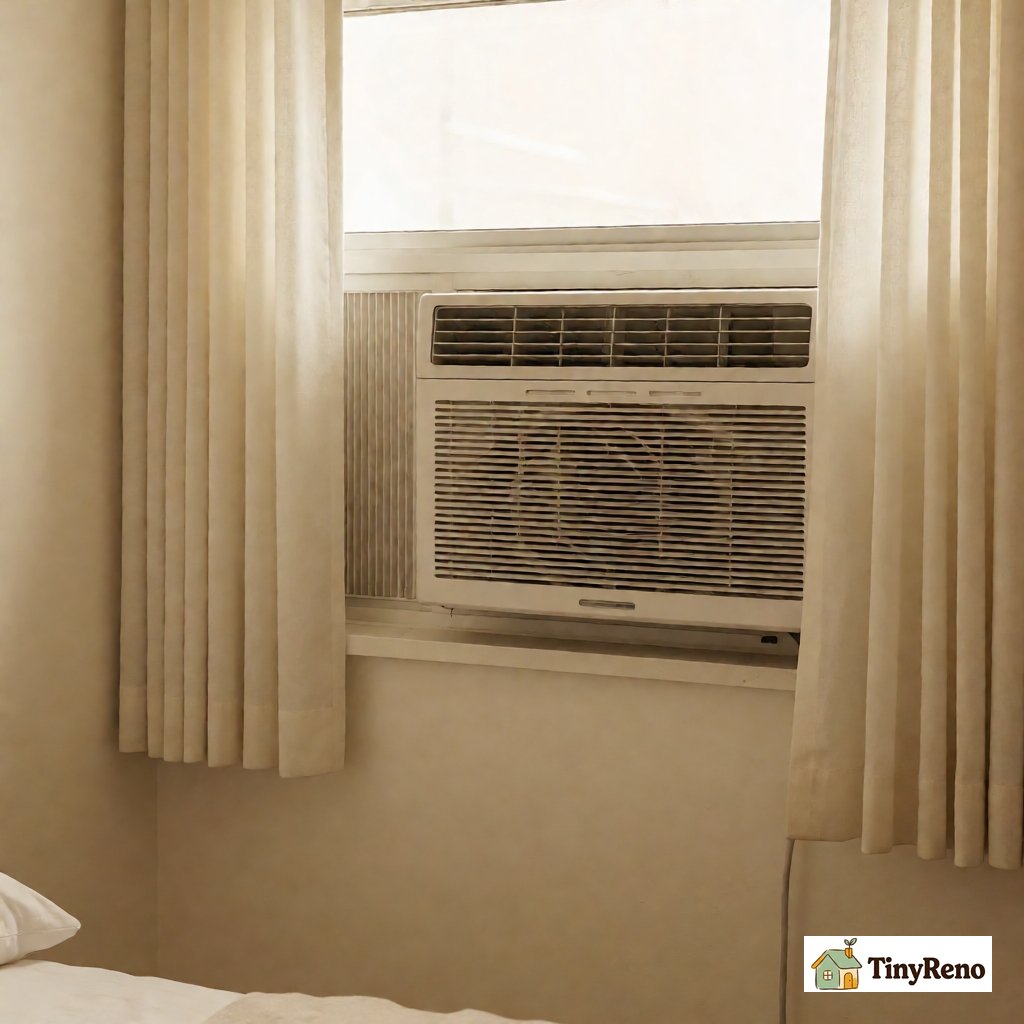
The window unit: Leo's free LG, the install, and the first week's data
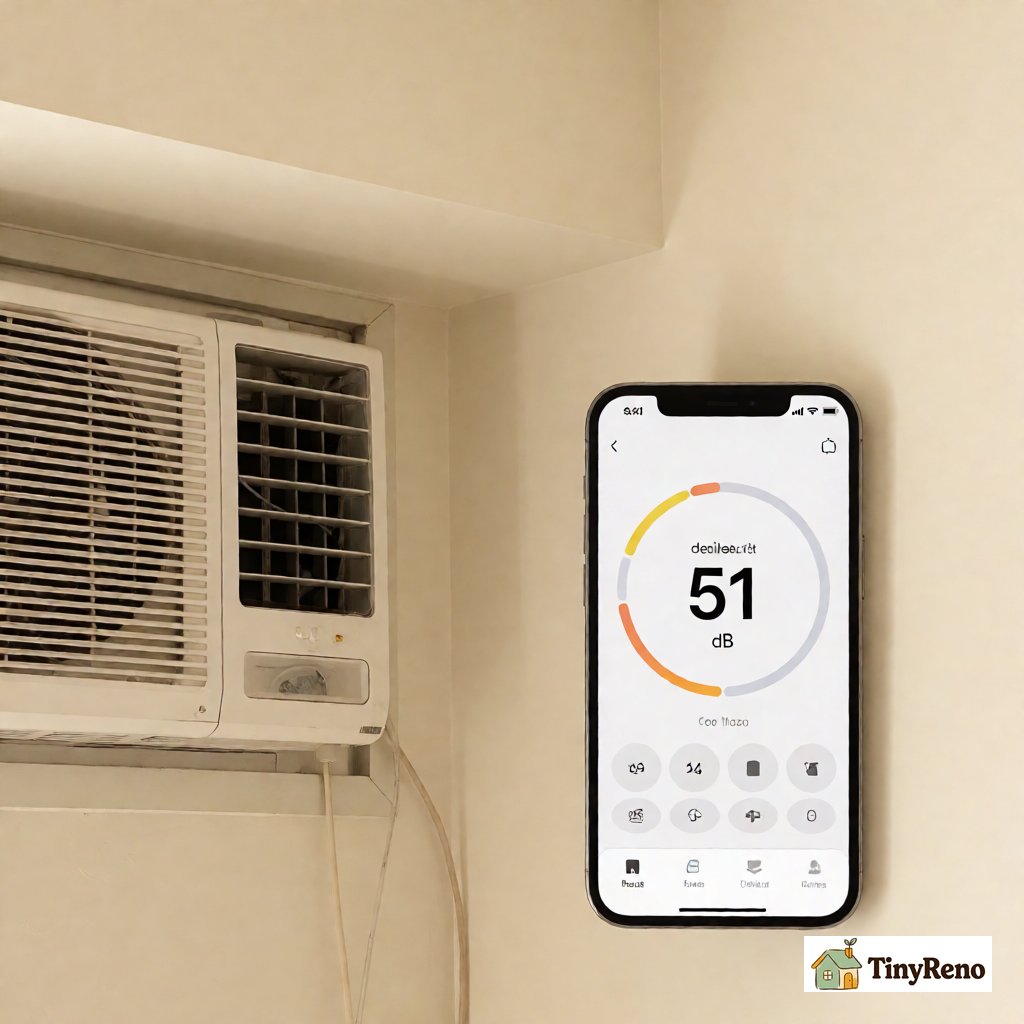
The window unit was a six-year-old LG LW6017R, 6,000 BTU, that Leo pulled from a basement storage rack. It was dusty, the foam side panels were crumbling, and the filter was grey. He handed me a tube of caulk and a screwdriver and said the install would take about thirty minutes. It took forty because the sash channel in 6F was 25.5 inches and the unit was 24 inches wide, leaving almost no wiggle room. I centered it, dropped the sash onto the top flange, pulled out the accordion side panels, screwed the top rail into the sash, and caulked the three edges I could reach. The unit stuck about four inches out past the window frame and vibrated slightly on high. The decibel reading at three feet, from a free phone app, was 58 dB on low and 64 dB on high. LG rates the LW6017R at 52 dB indoor on low, so the app likely read high because of the phone microphone and the bare room; the relative comparison between the two units is still useful. A quiet refrigerator runs about 40 dB and normal conversation about 60 dB, so the window unit on high was roughly conversation-loud.
The first week’s data was the part I trusted. I put a $12 digital thermometer/hygrometer on the bookshelf three feet from the unit and logged temperature at 3 p.m., 6 p.m., and 10 p.m. daily. The average afternoon temperature in the living room with the window unit on was 76°F, versus 86°F without it. The unit pulled the room down ten degrees and held it, with the compressor cycling about every twenty minutes on a 90-degree day. A $24 Kill-A-Watt meter showed 510 watts on high and 280 watts on low. At Indianapolis Power & Light’s summer rate of about 11 cents per kWh, running the window unit twelve hours a day for thirty days cost roughly $22 to $25. That was my baseline.
The portable AC: a Whynter ARC-110WD and the noise problem nobody warned me about
The portable AC was a Whynter ARC-110WD I rented from a local HVAC rental shop on East Washington Street for $89 a month. It is a dual-hose unit rated at 11,000 BTU ASHRAE, with a DOE SACC rating of 5,900 BTU. That gap matters more than the headline number. ASHRAE BTU is measured under lab conditions with no ducting; once you attach the exhaust hose to a window slider, duct losses and gasket leaks consume a large share of the rated capacity. The dual-hose design reduces the negative-pressure problem that plagues single-hose units, but it does not make the SACC rating disappear. In the 480-square-foot sublet, the delivered cooling was 5,900 BTU, still more total capacity than the 6,000 BTU LG window unit but spread across a larger space. The 3 p.m. temperature with the portable running was 78°F, two degrees warmer than the window unit in a smaller room.
Noise was the disqualifier, but not in the way the spec sheet suggests. The Whynter’s compressor measured about 56 dB at three feet, technically quieter than the LG’s 64 dB on high. What the decibel meter underweighted was a low-frequency rumble from the exhaust hose that carried through the drywall into the next room. The sublet landlord’s cat moved her sleeping spot from the living room to the bedroom closet. The portable also gurgled from the condensate tank every forty minutes, enough to wake me twice in the second week. The meter said the portable was quieter; lived experience said it was more intrusive. The window unit had a sharper, higher-pitched compressor drone. The portable had a lower, broader rumble that hung in the air.
The thirty-day comparison across two apartments
Across the full month of July, the data told a clear story. The window unit in 6F held the living room at a 76°F average with about $25 in electricity. The portable AC in the sublet held the living room at 78°F average with $42 in electricity plus the $89 rental, totaling $131 for the month. The window unit won on temperature and cost about five times over. The portable won on one dimension and one dimension only: install. It rolled in on wheels, the hoses slid into a window slider, and the whole setup took fifteen minutes. The window unit install took forty minutes, a caulk gun, a screwdriver, Leo’s approval, and a signed install waiver on file.
The lease question mattered most for a renter. Keystone’s clause 11.4 bans “self-contained evaporative or condensing cooling units that exhaust condensate into the building structure or common areas.” Window units drip outside, not into the building. The portable’s condensate tank needs emptying every six to eight hours, or you can run a drain hose, which is what I did. Even with the hose, a dual-hose portable pulls moisture from the room and exhausts it outside, so the 480-square-foot bungalow still felt humid with the AC running. The portable won the install battle and lost on lease fit, noise, and running cost.
The third option I tried on day twenty-one: a through-wall sleeve unit
On day twenty-one I borrowed a Frigidaire FFRA062WA1 from a friend’s garage. It is a 6,000 BTU through-the-wall/window unit, meaning it can be installed in a window sash or through an exterior wall with a proper sleeve. The sleeve is a separate construction item: a metal frame bolted through the wall, sealed with flashing, with the unit sliding in like a drawer. Leo looked at it on day twenty-two and said Keystone would not allow it. The wall penetration would breach the building envelope, and the LLC’s insurance rider for 6F excludes modifications to exterior walls. He was polite and had seen the request before. He said no twice, and the unit went back to the garage on day twenty-four. For a renter, the through-wall option fails on permission, not performance.
The portable AC broke on day twenty-eight. The compressor clicked every fifteen seconds and the room climbed from 78°F to 84°F by mid-afternoon. The rental shop sent a tech the next morning, who diagnosed a failed capacitor and swapped it in twenty minutes. The unit ran fine for the last three days of July, and the shop did not charge me because the rental contract covered repairs. If I had owned the Whynter out of pocket, the capacitor swap would have been roughly a $140 service call plus parts on a unit that sells for about $400 to $500 new. Portable AC parts tend to wear faster than window-unit parts because the compressor runs hotter inside a plastic housing.
The verdict after a full July in Indianapolis
The verdict, after a full July in Indianapolis, two apartments, two electricity bills, two install procedures, one waiver, one lease clause, one capacitor swap, and three rounds of the decibel meter: for most renters, the window unit wins unless the lease says otherwise. It won on cooling, cost, and noise once the rumble was factored in, and it lost only on install effort and the landlord conversation. The portable won on install, lost on cooling, cost, and reliability. The through-wall option is the best long-term answer for an apartment you own, assuming the wall is suitable and the building allows it. For a renter, the window unit was the right call, and the four-minute conversation with Leo on a Wednesday in June saved about $105 across July and a noise problem I would have lived with all summer.
If you are still deciding, the answer depends on your lease and your tolerance for install work. If your landlord allows a window unit, the window unit wins on every dimension that matters for a renter. If your lease bans window units—a meaningful share of leases do, though there is no reliable national percentage—the portable AC may be the only option. If you must go portable, choose a dual-hose unit; the Whynter ARC-110WD is the one I tested and the minimum design I would accept, because single-hose units create negative pressure that pulls hot outside air back in. The through-wall option is for owners, not renters, and it requires wall modification and building approval. For a renter, the first move is always to read the lease clause and ask the landlord in writing, not to assume the answer.
Leo gave me one more piece of advice on day thirty, when I returned the waiver paperwork with the install photos attached. The most common mistake he sees, he said, is renters buying a portable AC because the listing says 11,000 or 14,000 BTU and assuming that means more cooling than a 6,000 BTU window unit. The ASHRAE number is not the delivered number; the SACC rating on the Whynter was 5,900 BTU, and duct losses eat much of the rest. The window unit, even a six-year-old one from a basement storage rack with crumbling foam panels and a grey filter, cooled the Indianapolis apartment more cheaply and more quietly than the portable I rented. The lease conversation is the step you cannot skip, and clause 11.4 is the reason I spent August in a 76-degree living room in unit 6F.


Discussion (0)
Sign in to join the discussion