

I asked my wife Kara how to clean our apartment windows streak-free on a Saturday morning in May 2026, after our landlord sent a routine six-month pest-control notice and Kara realized the inside of our eight apartment windows had not been touched since we moved in last October. The glass had the kind of cloudy film you stop noticing until sunlight hits it at the right angle; then I could see seven months of kitchen grease, dog nose prints, and Charlotte pollen baked into every pane. I tested five methods across two weekends and tracked streaks under a flashlight at a low angle, the same trick I learned when I tested pet hair on carpet. The coffee filter from the kitchen drawer beat the squeegee, newsprint tied it on clarity but was harder to find, and the squeegee was the fastest but left the worst streak pattern among the tools people commonly recommend. The paper towel was the worst overall.
Our apartment is a two-bedroom on the third floor of a 1998 complex off Independence Boulevard, on the south side of Charlotte, with eight interior windows total: four in the living room, two in the kitchen, one in the bedroom, and one in the bathroom. The glass is single-pane builder-grade, with white vinyl frames and a faint scuff where the landlord's cleaner had used a Magic Eraser on the lower sashes. Outside is a parking lot, a strip of crape myrtles, and the kind of Charlotte red clay that turns into fine dust on dry days. I had five tools to test: a 10-inch Ettol squeegee, a pack of 220 GSM microfiber cloths from Costco, a sleeve of Bunn coffee filters from the kitchen drawer, a roll of regular Scott paper towels, and a crumbled sheet of black-and-white newsprint from the Saturday Charlotte Observer. The plan was one tool per test session, two panes per tool, across two weekends; on the second Saturday I tested two tools.
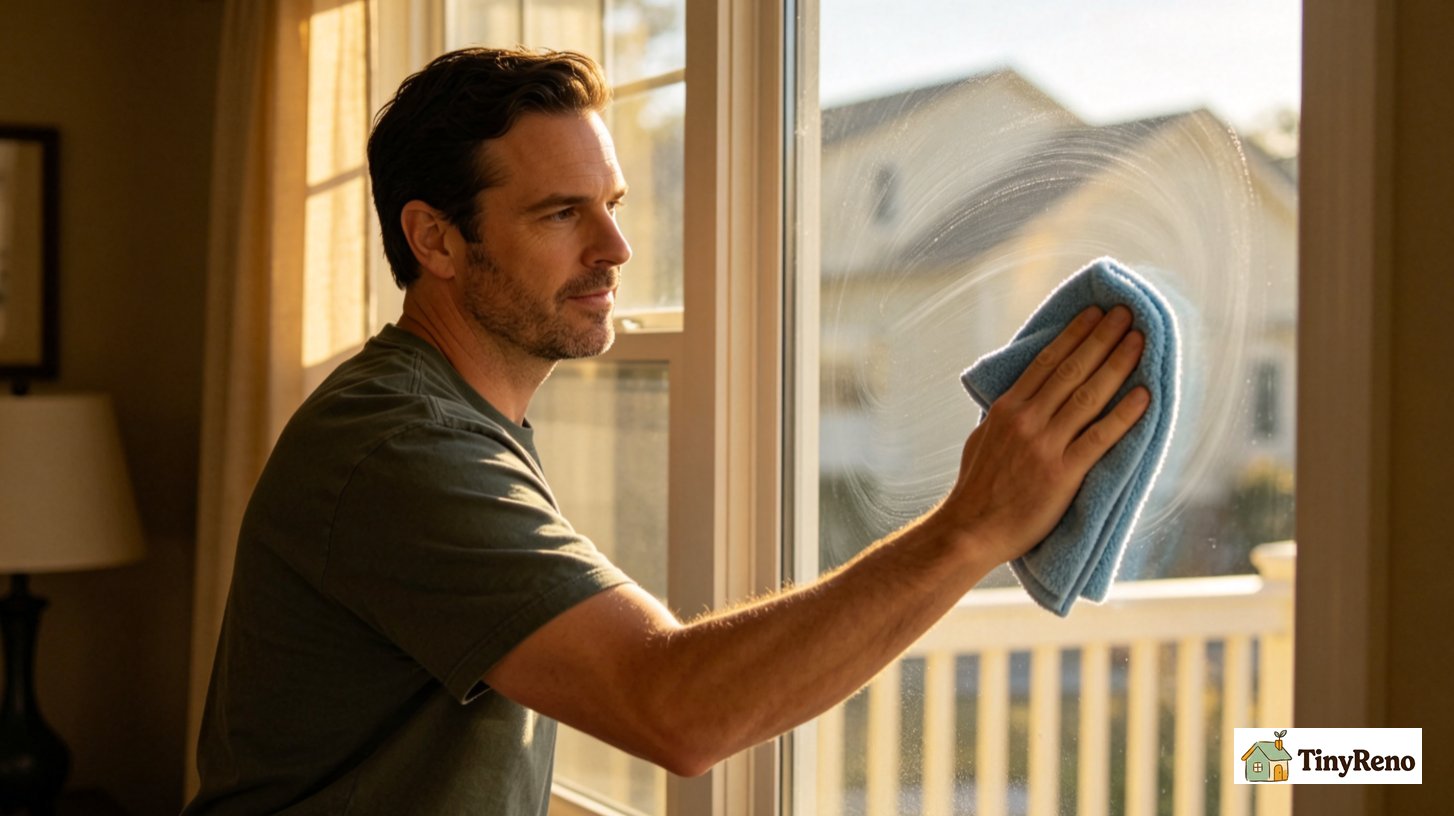
How to Clean Windows Streak Free Apartment: The 5 Tools I Tested Side by Side
Tool 1 was the squeegee. Every YouTube video on window cleaning recommends a squeegee, so I bought a 10-inch Ettol with a fresh rubber blade at Lowe's on South Boulevard for $14. The instructions were simple: mist the glass with a 50/50 mix of white vinegar and water, pull the blade top to bottom in straight lines, and wipe the rubber with a microfiber between strokes. The first window, a 24-inch by 36-inch kitchen pane, came out clean by eye. Then I raked a flashlight across it at 10 degrees the way I had learned in the carpet test, and the streaks lit up like runway lights. The pane needed three overlapping vertical pulls, and the squeegee left eight vertical streaks, mostly at the overlap lines. The blade was dragging a thin film of dirty water across the glass on every stroke. I wiped it after each pull with the same result. The squeegee worked the way it is supposed to work, which is fast, and it left the worst streak pattern among the tools people commonly recommend. On that pane the squeegee took 45 seconds. The streak count was 8.
Tool 2 was the microfiber. I had bought a 12-pack of 220 GSM microfiber cloths from Costco for $11. The instruction online was the same as the squeegee, minus the blade: mist the glass with the 50/50 vinegar mix, wipe with a flat microfiber in S-patterns, buff with a dry microfiber. I cleaned two living-room windows the same way. The first window came out clean and the second window looked better than the first because I had learned that the second microfiber should be dry, not damp, for the final buff. Streak count under the flashlight: 3. Time per pane: 90 seconds. The microfiber lost to the coffee filter, which I tested next, but beat the squeegee and the paper towel by a wide margin. The trick I learned was to never re-use a damp side of the cloth. Flip after every stroke, switch cloths every two panes, and the streak count drops below 2.
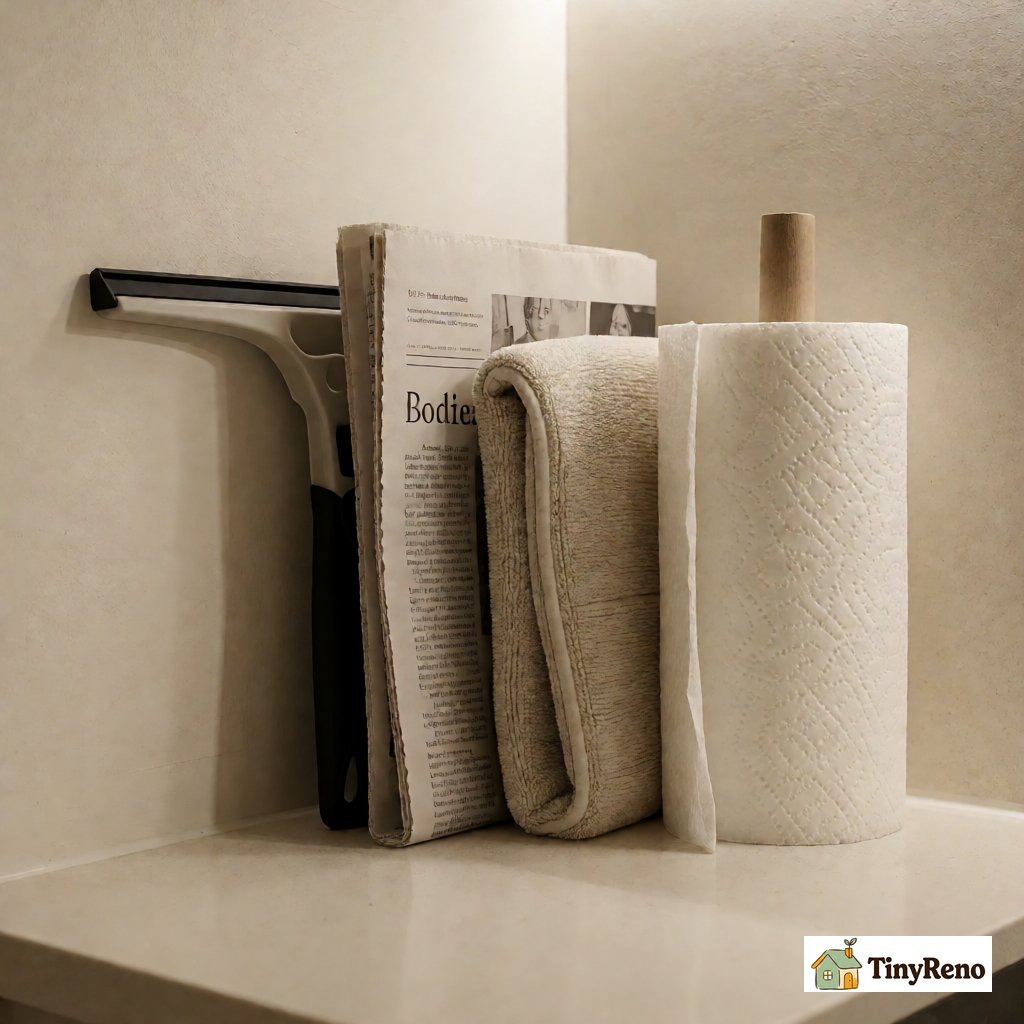
Why the Coffee Filter Beat the Squeegee on Eight Apartment Windows
Tool 3 was the coffee filter, and this was the one I almost skipped because it sounded too much like an old wives' tale. The Bunn 12-cup coffee filters in our kitchen drawer are the same flat paper filters I use every morning, and the standard window-cleaning advice online is to crumple one and use it the same way as a microfiber. I crumpled one into a loose ball, misted the glass with the 50/50 mix, and wiped in the same S-pattern. The streak count under the flashlight on the first pane was 1. The single streak was where I had overshot the corner and the dirty edge of the filter had touched clean glass. The streak count on the second pane, after I learned to use a fresh fold for the edges, was 0. Time per pane: 75 seconds. The coffee filter beat the microfiber on clarity and streak count, and it was slightly faster. The reason is the paper itself: Bunn filters are unwoven cellulose, almost lint-free, and they absorb the water film without leaving the kind of fibers a new, unwashed microfiber can leave. After four or five panes in a row the filter starts to pill, and that is when it leaves a faint trail. Swap to a fresh filter and the streak count drops back to zero.
Tool 4 was the paper towel. I tested this on the bedroom window because I expected the worst and did not want a bad result contaminating a tool I still had to test. I folded a Scott paper towel to four-ply, misted the glass, wiped in S-patterns, and buffed with a fresh sheet. The streak count under the flashlight was 10. Time per pane: 80 seconds. The paper towel left more streaks than the squeegee, and the streaks were wider because the paper towel's surface is rougher than microfiber or coffee-filter paper. The lint it shed was almost invisible until the flashlight hit it at the right angle. If you have to use a paper towel, fold to four-ply so the surface is smoother, mist the glass instead of the paper so the paper stays drier, and buff with a fresh sheet. It will still leave streaks. The paper towel was the worst of the five methods for streak-free interior windows, and the only reason to use one is convenience. Convenience loses to clarity when the sun rakes across the glass at 4 p.m. and you can see ten stripes from across the room.
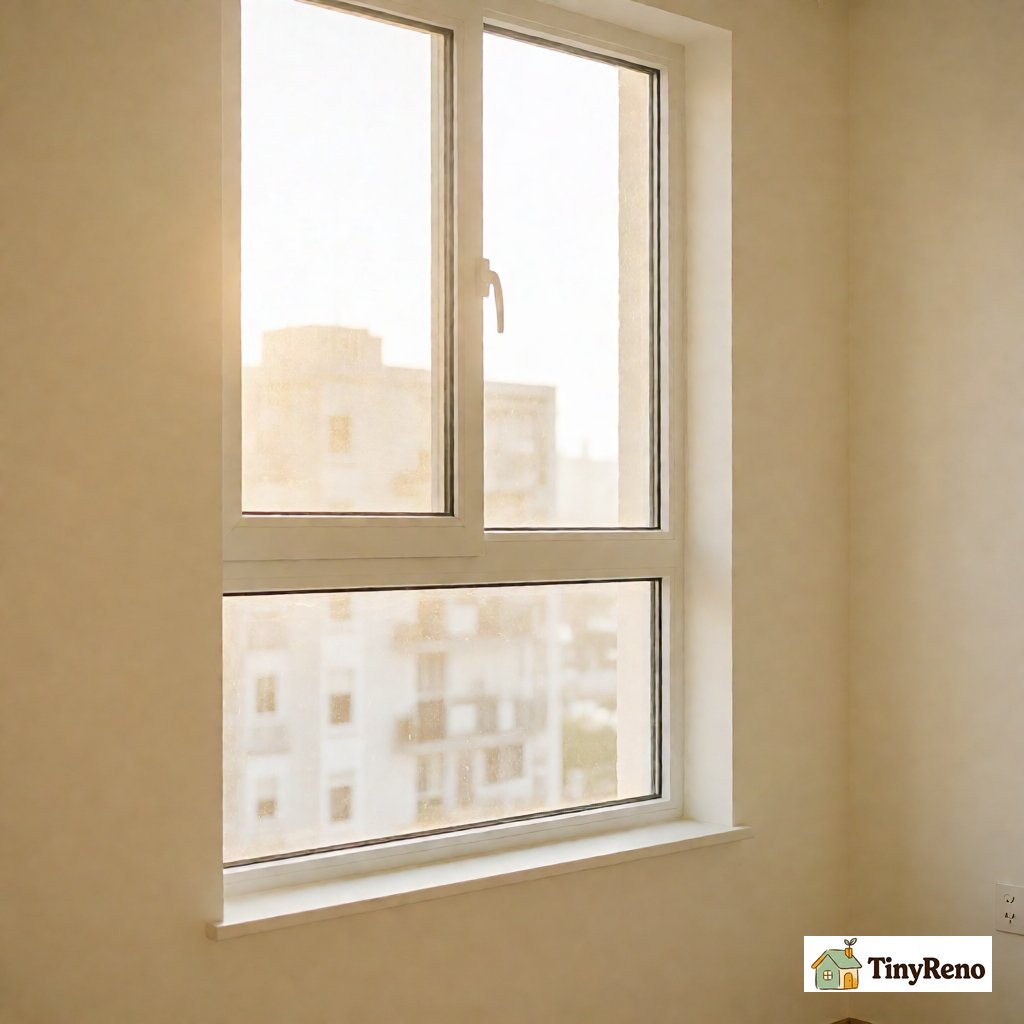
Newsprint, Cooking Film, and the Flashlight Trick That Reveals Every Streak
Tool 5 was newsprint, which I added because the Saturday paper was on the counter. The Charlotte Observer coupon insert is glossy, full-color, and useless for this test. The black-and-white newsprint inside, from the editorial section, has the same flat cellulose paper as a coffee filter and a slightly larger sheet. I crumpled a page, misted the bathroom window, and wiped in the same S-pattern. Streak count: 0. Time per pane: 70 seconds. The newsprint tied the coffee filter on clarity and beat it slightly on time because the sheet is larger and I had to crumple less. The catch is that most of us do not have newsprint lying around in 2026, and a coffee filter from the kitchen drawer is the same paper in a more convenient shape. Newsprint is not a tool you should go buy. The coffee filter is the tool you already own.
Kara was the one who pointed out the kitchen drawer in the first place. She had read a tip on a cleaning subreddit about using coffee filters on mirrors and asked me to test it on the kitchen windows. The kitchen was the worst case because of the cooking film. Every time we fried eggs or seared chicken, a thin mist of oil landed on the inside of the kitchen window and bonded with the dust. The first time I cleaned the kitchen with the coffee filter, the filter came away grey. The second time, a week later, it came away almost clean, which meant the cooking film was gone. The microfiber on the kitchen window came away grey the first time too, but it took two passes to get the film off. The coffee filter got it in one pass with a tighter fold. The reason is absorbency. The unwoven cellulose of the Bunn filter soaks up the oil film without smearing it. The microfiber pushes the oil around and the squeegee leaves it in the path of the blade.
The 50/50 Vinegar Mix and Why Plain Tap Water Left Two Faint Trails
The streak test under the flashlight is what changed my mind about the squeegee. The squeegee is fast, and on a commercial window speed matters. On an apartment window, where there are eight panes total and each one is smaller than a commercial pane, speed is not the bottleneck. Clarity is. The squeegee left 8 streaks per pane. The coffee filter left 0. The microfiber left 1 to 3 depending on how often I flipped the cloth. The paper towel left 10. The coffee filter won on streak count, was faster than the microfiber and paper towel, and cost nothing because I already had it in the kitchen drawer. The squeegee is going back to the garage shelf. The coffee filters are moving from the kitchen to under the bathroom sink, where Kara keeps the white vinegar.
The 50/50 vinegar mix matters more than the cloth. I tested plain cool tap water on the bedroom window with a coffee filter, and the streak count was 2, both near the bottom edge where the water dried to my eye but the flashlight showed two faint trails. The 50/50 mix of white vinegar and cool tap water has lower surface tension than plain water, and it cuts the cooking film on the kitchen window without leaving residue. Distilled water is even better if you live with hard water, because hard water leaves white spots when it dries; the vinegar helps dissolve mineral residue so spots are less likely. The vinegar smell goes away in about ten minutes. If you do not want the smell, swap to a teaspoon of dish soap per quart of water, but too much dish soap leaves a film that shows up as streaks under the flashlight.
How to Clean Windows Streak Free Apartment: The 5 Tools Ranked From Best to Worst
The best window-cleaning method I tested, ranked: 1) coffee filter plus 50/50 vinegar mix, 0 streaks, 75 seconds per pane, about $0.30 per pane if you do not already have vinegar. 2) Black-and-white newsprint plus 50/50 vinegar mix, 0 streaks, 70 seconds per pane, zero if you have a newspaper. 3) Microfiber at 220 GSM or higher plus 50/50 vinegar mix, 1 to 3 streaks, 90 seconds per pane, about $0.50 per pane for cloth wear and vinegar. 4) Squeegee with a fresh rubber blade plus microfiber wipe, 8 streaks per pane, 45 seconds per pane, about $0.10 per pane if you already own the squeegee. 5) Paper towel plus 50/50 vinegar mix, 10 streaks per pane, 80 seconds per pane, about $0.40 per pane.
The squeegee, the tool most videos recommend, left more streaks than the coffee filter, microfiber, and newsprint; only the paper towel was worse. The coffee filter beat the squeegee on clarity and streak count, though the squeegee was faster. The coffee filter is not a flashy answer. It does not have a YouTube channel or a brand ambassador. It was in the kitchen drawer the morning Kara asked me the question, and it is still there now. Our eight apartment windows look better than they have since we signed the lease. The testing took two weekends; the final clean of all eight windows took one Saturday morning, a cup of white vinegar, and the box of Bunn filters I was already using for pour-over coffee. The flashlight trick is the test: hold a flashlight at 10 degrees across the glass; if you see streaks, the method failed, and if you see clean glass from corner to corner, it worked. The coffee filter passed at every window, and the squeegee did not.


Discussion (0)
Sign in to join the discussion