

I compared carpet and hardwood across two apartments over four years in Louisville. My building manager Pat sat me down in her office on a Tuesday in March 2026 and walked me through the deposit math from her last sixty move-outs. Pat has been the on-site manager at the Brookline property off Taylorsville Road for nine years, and she has seen more flooring disputes than broken leases. I break the comparison into six categories, two leases, and one lease-clause trapdoor. Cost is usually the deciding factor, but not always.
My first Louisville apartment was a two-bedroom on the second floor of a 1990s garden-style complex in Lyndon. It had wall-to-wall builder-grade beige carpet that already felt matted from previous tenants. I lived there from January 2022 to December 2023 with my dog Maple, a 50-pound mixed-breed rescue. My second apartment is a one-bedroom in a renovated 1940s bungalow in Schnitzelburg, with refinished original oak hardwood floors; I had been there about three months when I spoke with Pat. Friends moving to Louisville often ask which floor I would pick again, and my answer is not what I expected when I started.
Category 1: move-in cost and what the landlord covers
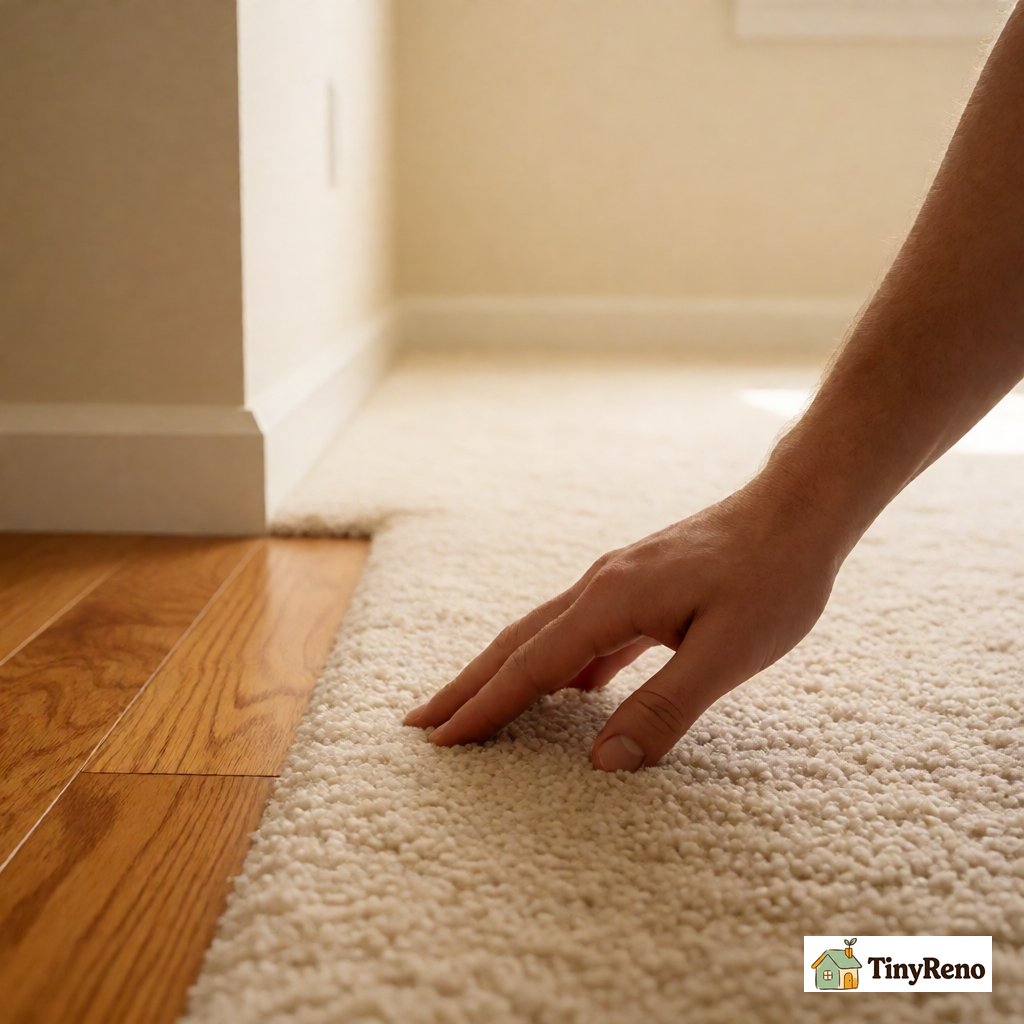
Move-in cost was roughly even in my two leases. Most Louisville landlords do not charge extra for existing wall-to-wall carpet because neighboring units set the rent comps. Hardwood floors sometimes come with a $100–300 deposit premium, depending on the building, but my current bungalow charged a standard $800 deposit with no flooring surcharge. The hardwood had already been refinished before I moved in. My Lyndon apartment had no carpet charge beyond the deposit. So at move-in, the two were about even. The carpet cost is baked into the rent, while the bungalow rent was higher, but the deposit itself was the same.
Category 2: monthly cleaning and routine upkeep
Routine cleaning is where hardwood pulls ahead, mostly in time rather than cash. On carpet, I vacuumed twice a week—about 90 minutes total—and paid for professional steam cleaning twice a year at about $120 per visit. On hardwood, my routine is a 15-minute Tuesday sweep and a 30-minute Saturday damp mop, plus a $7 bottle of Bona that lasts about three months and one $60 can of touch-up polish for scuffs. Over a year, carpet cleaning cost me about $240 in professional cleaning plus supplies; hardwood cost about $90. Across a two-year lease, the cash difference was only a few hundred dollars. The bigger difference was the weekly time. For me, that time savings is the main reason I would choose hardwood again.
Category 3: how each floor feels underfoot (the sensory category)
The feel underfoot does not show up in a cost calculator. Carpet is warm on bare feet in January, soft when Maple dropped a toy under the couch, and quiet when I dropped a pan at midnight—it stayed put instead of bouncing. Hardwood is cold on bare feet in January, hard when I kneel to plug in a lamp, and unforgiving when I drop a glass at midnight. Maple is more comfortable on carpet and slips a little on hardwood, especially after a walk in the rain. If you have a dog, comfort and damage costs matter more than cleaning savings. Pat told me she has seen more scratched hardwood from dogs than from any other single cause. In a large-dog worst case, her standard move-out charge is $180–240 per board, with most units needing two to four boards after a two-year lease. For a big dog, that can wipe out years of cleaning savings in one move-out.
Category 4: noise transmission between floors (this is where carpet wins)
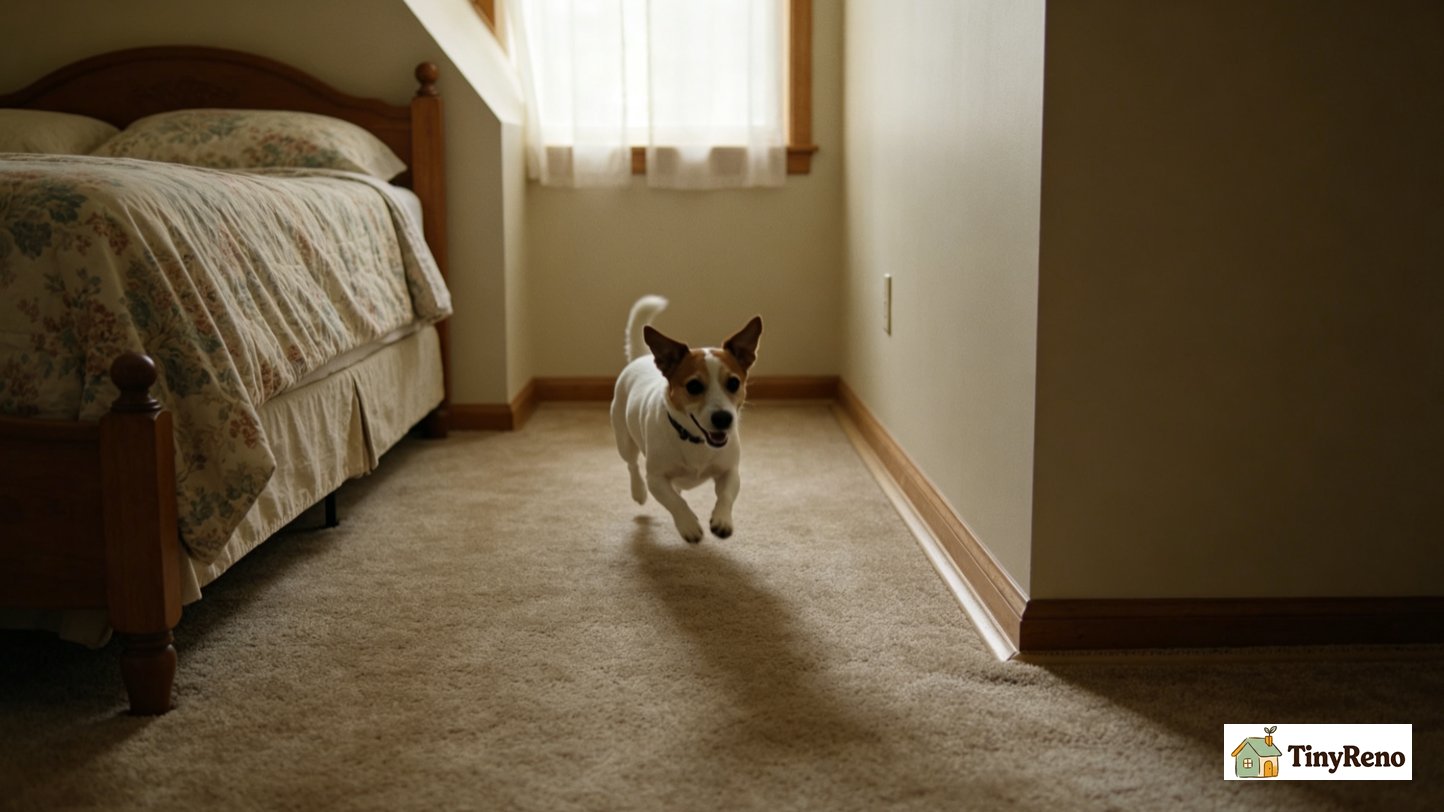
Noise transmission is the one category where carpet wins decisively. My Lyndon apartment was on the second floor, and the downstairs neighbor texted me once in 2022 to say she had never heard Maple run, even when Maple got the zoomies at eleven p.m. on a Wednesday. My current bungalow is a single-floor unit, so I cannot compare directly. But Pat told me her upstairs carpet units draw fewer noise complaints than her upstairs hardwood units. For a renter with a downstairs neighbor and a dog or toddler, carpet is the better deal in this one category, and the difference can be the difference between a complaint letter and getting along.
Category 5: allergen and dust behavior (the spring allergy category)
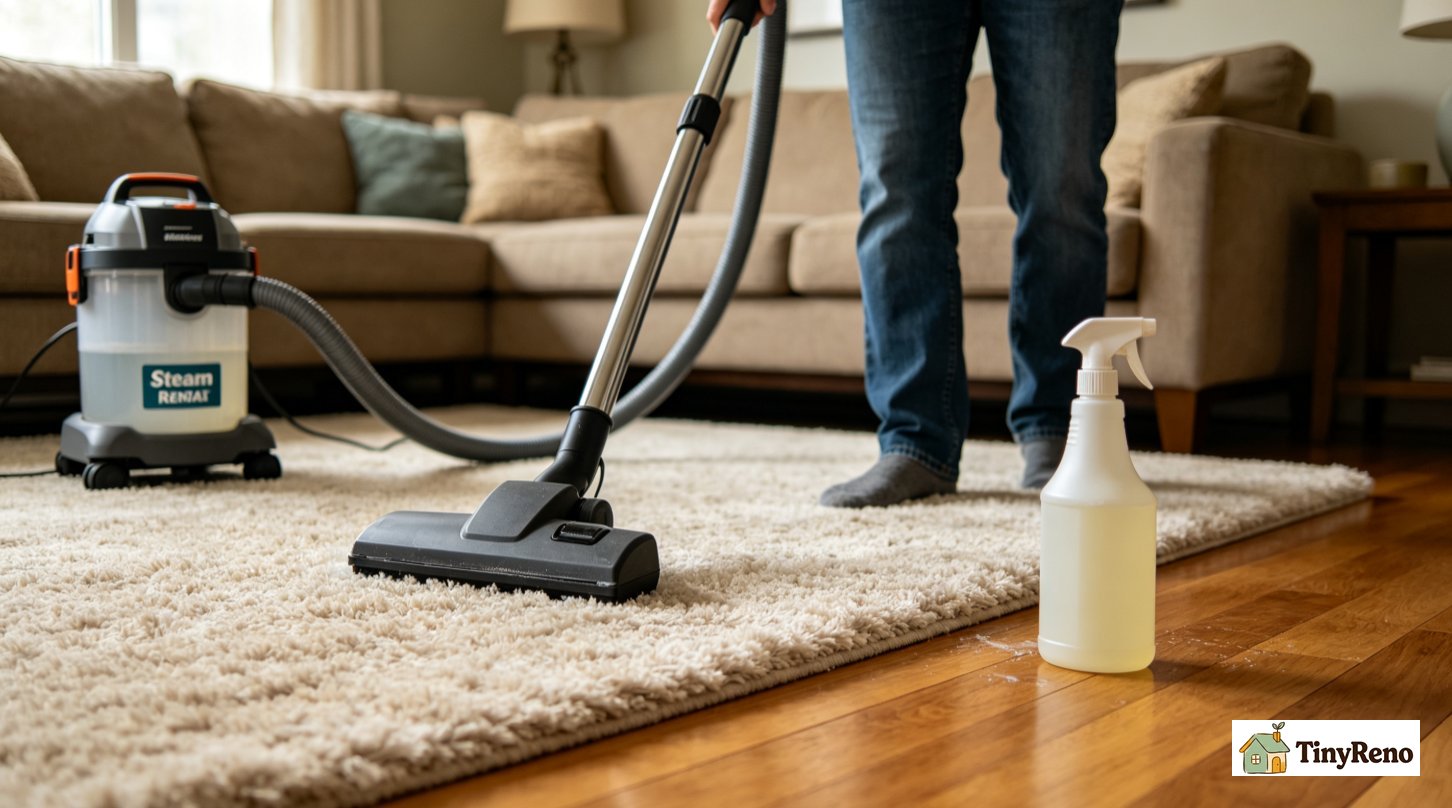
Allergen behavior is the category that surprised me. My Lyndon carpet apartment felt dustier than the bungalow. I bought a $35 particle counter from Amazon in April 2023 and ran it for a month in each unit. The carpet apartment averaged about 12 micrograms per cubic meter of PM2.5 over a 24-hour reading; the hardwood bungalow averaged about 4. PM2.5 is not a dust-mite count, but it is a useful proxy for airborne particles. My morning sneezes dropped to near zero in the bungalow and stayed at two or three per morning in the Lyndon apartment during peak pollen weeks in April. For a renter with allergies or asthma, hardwood is the clear winner. For a renter without allergies, the difference is real but smaller. Pat said tenants have asked about breaking leases over carpet-related allergy concerns, though she could not verify medical causes; she has not had that conversation about hardwood units.
Category 6: how each floor ages over a two-year lease (the deposit category)
Floor aging is the trapdoor category, the one that decides whether you get your deposit back. Carpet ages in obvious ways: traffic lanes darken, pet accidents leave permanent spots, and red-wine or tomato-sauce stains usually do not come out. Hardwood ages in obvious ways too: water rings from a sweating glass left overnight, scratches from a chair moved without felt pads, and gaps between boards in winter when the heat runs. Pat pulled out her move-out ledger when I asked about floor deposit math. Across her last sixty move-outs, the average carpet-related deduction was $220 and the average hardwood-related deduction was $310. Hardwood looks nicer on move-in but costs more on move-out on average, because landlords charge for board replacement and refinishing, while carpet falls under a depreciation schedule that caps charges after year three or four. The average hardwood charge includes small repairs, not just the large-dog board replacements I described earlier. The net winner depends on how old the floor is when you move in.
The trapdoor: lease clauses on floor damage
The trapdoor is the lease clause on floor damage. In Louisville and most of Kentucky, a landlord can charge a deposit deduction for damage beyond normal wear and tear. Normal wear on carpet is defined by some landlords as "matting in traffic lanes but no stains" and by others as "appearance consistent with the age of the carpet." Normal wear on hardwood is often defined as "minor surface scratches that buff out," but not "gaps, water rings, or pet stains in the wood grain." If you sign without reading the floor-damage clause, you can lose $400–800 at move-out for flooring alone. My Lyndon lease defined carpet wear as "noticeable stains or matting," which was strict about stains but vague about matting. My bungalow lease defines hardwood wear as "no scratches visible from 3 feet with normal lighting," which is strict. Read the clause before you sign.
What Pat sees most, and what I would choose again
The question I keep getting is which floor I would pick if I had to choose again. Pat's data says hardwood wins on cleaning costs and allergens, carpet wins on noise and the move-in look, and the deposit math depends on the lease clause and floor age. Across my two leases, my total out-of-pocket for flooring was $340 in the Lyndon apartment: a $180 steam-cleaning fee at move-in that I never got back and a $160 charge for replacing two hallway carpet tiles that Maple had stained. In the bungalow, it was $90 so far: a $40 refinish touch-up in March to buff out a chair scratch and $50 in floor-cleaning supplies. After four years and two apartments, hardwood was cheaper by about $250 in my personal accounting. The bigger win was the morning sneezes, which I did not know to track when I started but notice every day now.
The honest answer for a renter in Louisville depends on whether you have a dog, whether you have allergies, and which lease clause you signed. For a renter without a dog and without allergies, hardwood wins clearly on cleaning and allergens, move-in cost is roughly even, and the deposit difference is usually small; carpet still wins on noise and comfort. For a renter with a big dog or a toddler who drops food, noise and comfort matter more than cleaning savings, and carpet can win on day-to-day living even when it loses on the spreadsheet. Pat's advice, when I asked her at her desk in the Brookline leasing office, was to read the floor-damage clause and ask how old the floor is before signing. Those two questions swing the math more than most renters expect, and most never ask either one.


Discussion (0)
Sign in to join the discussion