

Swapping my closet from summer to winter was the Sunday project I did every October in my Brooklyn lease. My boyfriend and I share a one-bedroom in Park Slope with a 3-foot-wide closet that fits about 30 hangers. By October the bar is still full of summer things we have not worn since August, and the long-sleeve things are on the floor in three paper bags. The Sunday I worked out a 4-bin system is the Sunday the routine became a 90-minute job instead of a 4-hour project. The four-bin loop has held for four Octobers now. Here is how it works.
The four tiers of a fall closet rotation
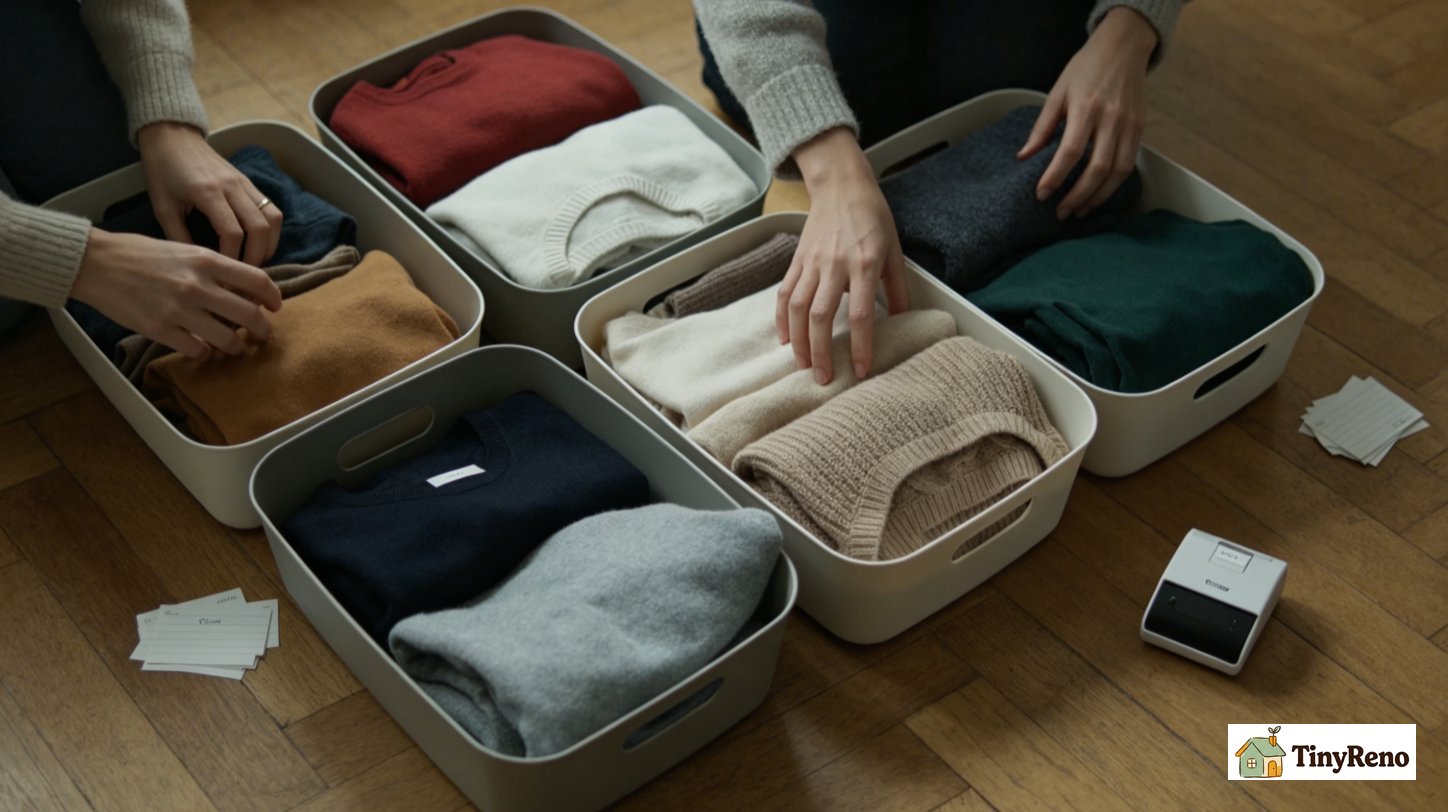
The first year I tried to do it by season. The second year I tried by color. The third year I tried by category. All three took the whole afternoon and ended with a pile on the bed and at least one sweater I could not find in March. The fourth year I switched to a tiered bin system. Each item got one of four labels. The four labels are keep, store, donate, or send-home. The swap is now a mechanical 90-minute loop where every hanger ends up in one place by Sunday afternoon.
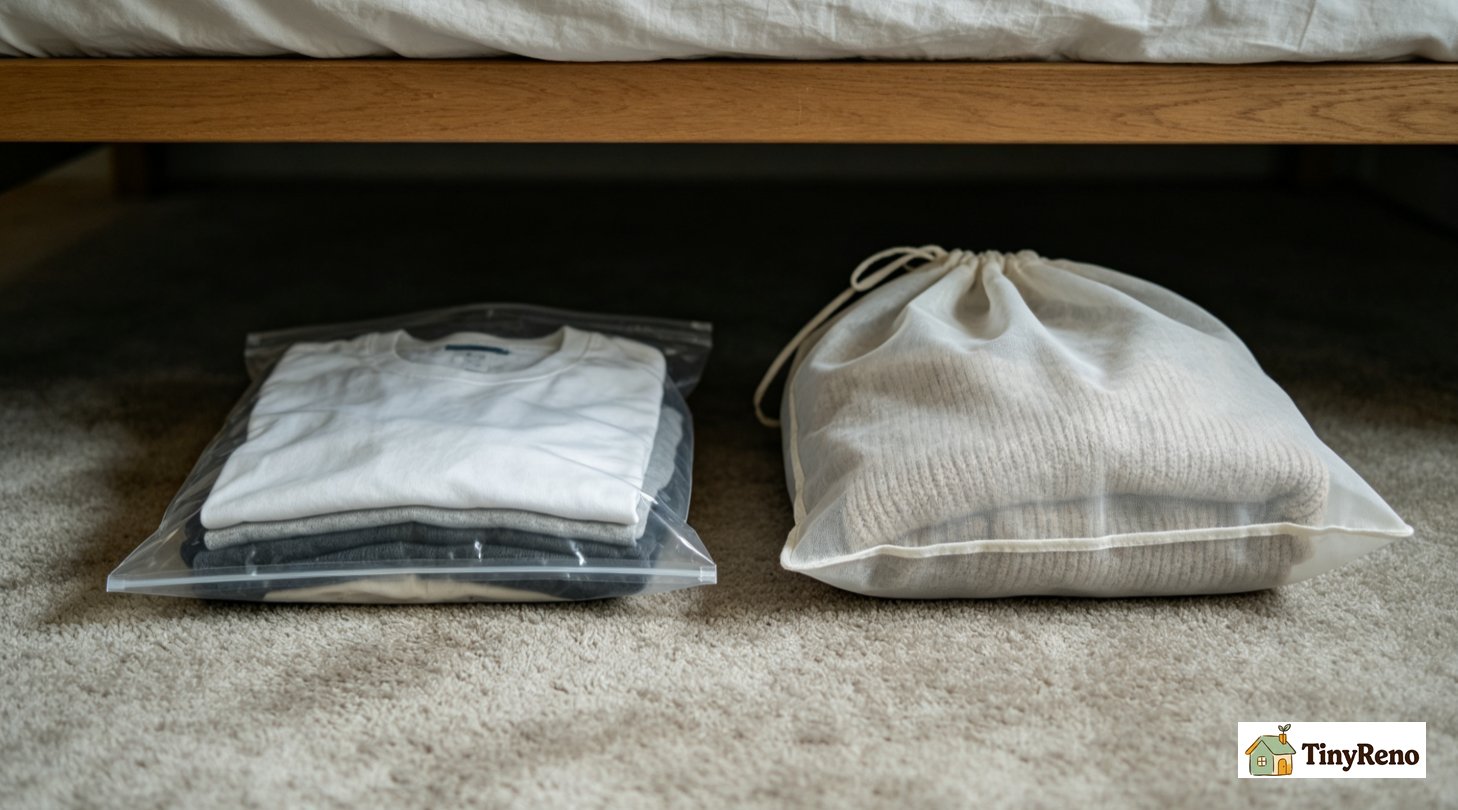
Tier one is keep. Anything I wore at least twice in the last three weeks of summer stays on the bar and gets moved to the right side or back of the bar. Tier two is store. Anything I wore but not in the last three weeks goes in a storage bag under the bed. Note: vacuum-seal bags work well for cotton and synthetic puffer jackets, but they are not ideal for wool, cashmere, or anything natural-fiber that needs to breathe. For those, use a breathable fabric bin or a cotton storage bag instead. Long-term vacuum storage can crush the fibers and leave sweaters permanently misshapen. Tier three is donate. Anything I wore twice or less in the past two summers leaves the building the same weekend. Tier four is send-home, which is a bin I keep for items my mom or a friend with more storage can take. The bin system works because the first decision is binary: keep it on the bar or put it in one of three containers. No pile on the bed.
The label and container setup that holds the loop together
I keep a label maker and a stack of index cards next to the bins. Each bin gets a card with the date of the swap. Each vacuum bag gets a printed tag with what is inside. The label system is the difference between the Sunday-afternoon version and the Sunday-evening version. Searching for a single sweater in March is what makes people abandon the system the next year.
My containers fall into three groups: two under-bed bins for vacuum-sealed sweaters, two plastic bins on the top closet shelf for short-sleeve button-downs and shorts, and one cardboard box by the front door for donations until I carry it down. The bins are labeled in two places because the label maker tape comes off cheap plastic after about a year.
What I store versus what I donate versus what I send home
The decision tree I worked out over four Octobers is roughly this. If I wore the item this summer and I will wear it next summer, it goes in the vacuum bag. If I wore it twice or less in two summers, it goes in the donation bin. If I wore it a lot but it is too bulky for the bin, I call my mom and ask if she has room. The fourth tier, send-home, is the safety valve for one-off pieces with family meaning.
| Item type | Tier | Where it goes | Why |
|---|---|---|---|
| Tank tops, summer tees | Store | Vacuum bag under bed | Worn, will be worn again |
| Linen pants, midi skirts | Store | Plastic bin top shelf | Bulky but rotated yearly |
| One wedding guest dress | Store | Hang-bag on hook behind door | Worn, season-specific |
| Three summer dresses unworn in 2025 | Donate | Cardboard box by door | Worn twice in two years |
| One cable-knit sweater from college | Send-home | Mom's attic | Sentimental, bulky |
| Five pairs of shorts, two worn | Donate | Cardboard box by door | Three pairs never worn in 2025 |
| Two beach towels | Store | Vacuum bag, bottom layer | Season-specific, low bulk |
Across four Octobers the bins have ended up roughly balanced. A third of the closet goes into vacuum bags. A fifth leaves the apartment as donation. About a tenth gets sent home or stored at a friend's place. The rest stays on the bar and gets moved to one side to make room for the winter coats coming in.
The actual Sunday routine, start to finish
The swap starts at 10 a.m. and ends around 11:30. I take everything off the bar first. The pile goes on the bed. Then I sort the pile into four bins on the floor. The keep bin ends up back on the bar, compressed tight so the sweaters can fit on the right half. Items in the store bin get vacuum-sealed two at a time so the seal stays even. The donation bin gets carried down to the lobby that night. The send-home bin sits in the corner of the bedroom until my next visit home.
The swap has four beats: empty the bar, sort into four bins, vacuum-seal the storage items, and carry the donation bin down. Anything beyond those four beats is procrastination. I stopped reading magazines while I did the swap because that was how the four-hour version started.
Why the swap is different in a shared closet
When my boyfriend moved in, we split the store bin into two personal store bins, one labeled with each of our names. That made five bins total: a shared keep bin, two personal store bins, a shared donation bin, and a shared send-home bin. The keep decision is mechanical: if both of us wore the item in the last three weeks, it stays on the bar; if only one of us wore it, it goes in that person's store bin.
The one rule that has saved the most arguments is that nothing goes into a partner's bin without asking. A single sweater that ends up in the wrong bin because someone was hurrying is the kind of small friction that compounds over a season. The bin system only works if everyone respects the labeling.
What I changed about the swap this October
I added one small thing this year that I am keeping. I take two photographs, one before and one after the swap, and save them in an album labeled by year. The photographs catch the items I forgot to swap, the items I thought I would wear that I did not, and the items I should have donated a year ago. Looking at the 2022 and 2023 photographs I can see three pieces I donated in 2024 that I should have donated in 2022. The swap looks different now than it did before I started taking photos.
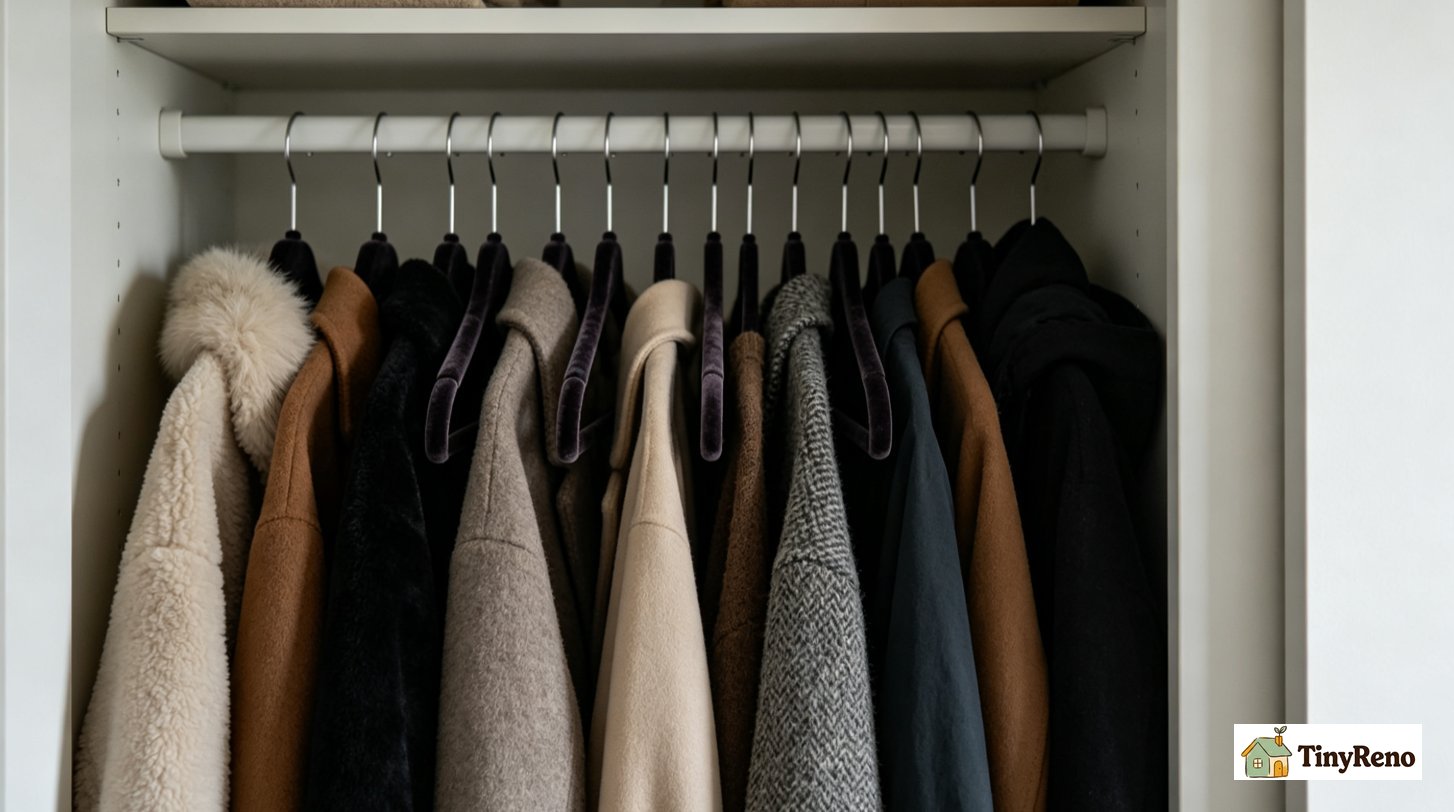
The other thing I stopped doing is fighting with my closet bar about hanger type. The thin velvet hangers take less space and they do not slip. I bought 25 of them in 2024 for $30 and they are the closest thing I have to a structural upgrade in a small rental closet swap. The 4-bin system is what held the loop together, but the velvet hangers are what made the loop feel less like work and more like a Sunday routine.
Common pitfalls that turn the swap into an afternoon
The three pitfalls I see when friends ask why their swap takes six hours instead of 90 minutes. The first is keeping a fifth bin labeled maybe. Maybe is not a category. Donate or store. The second is fighting wrinkles. If a piece comes out of the vacuum bag badly wrinkled in March, it was not a good candidate for vacuum storage; send it home or donate it. The third is letting shoes take up bar space. Five pairs of summer shoes go in a single shoe bin on the closet floor. They do not need hangers.
The fall closet rotation is the most mechanical of the seasonal chores, and the one where breaking the system has the lowest payoff. The 4-bin loop holds whether the apartment is 400 square feet or 1,200. It holds whether one person or two people are doing the swap. It holds whether the closet is 3 feet wide or 6 feet wide. The full Sunday routine plus a Sunday-evening donation run are the total time investment, and the payoff is a January morning when every sweater I reach for is one I actually wear.


Discussion (0)
Sign in to join the discussion